
Planting
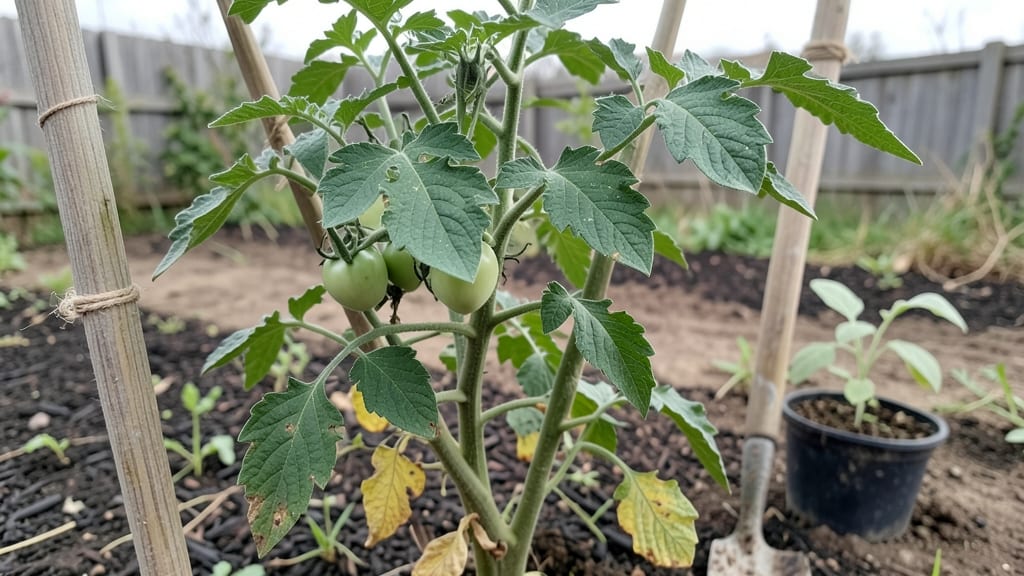
Tomato spacing in square foot gardens requires 1 plant per square foot for determinate varieties and 1 plant per 1.5–2 square feet for indeterminate types to ensure proper air circulation and yield. Overcrowding stunts growth, while too much space wastes garden area.
Determinate tomatoes grow in compact bushes, so their 1-square-foot spacing works perfectly for square foot gardens—ideal for small spaces or high-density planting.
Indeterminate varieties, though, sprawl like vines, which is why they need 1.5–2 square feet to climb trellises without competing for sunlight or nutrients. 🌱 I’ve found that using sturdy cages or vertical supports for indeterminate types not only saves space but also boosts airflow, reducing disease risks like blight.
For even better results, pair tomatoes with complementary plants like basil (which repels pests) or marigolds (which deter nematodes). Pruning suckers from indeterminate plants also encourages stronger fruit production, letting you pack more yield into your limited garden footprint.
The key is balancing density with airflow—too tight, and you’ll lose quality; too loose, and you waste precious real estate.
💡 In This Article
- How Tomato Varieties Affect Square Foot Spacing Needs
- Maximizing Tomato Yields in Limited Square Foot Space
How tomato varieties affect square foot spacing needs
Determinate tomatoes grow as compact bushes, typically reaching 3–4 feet tall with a 2–3 foot spread. Their growth habit makes them perfect for square foot gardens, where their contained size allows 1 plant per square foot without crowding.
The key here is their self-contained structure—they set fruit all at once and stop growing once mature, which eliminates the need for vertical support. This makes them ideal for small spaces or high-density planting scenarios. 🌿
Indeterminate varieties, however, grow continuously throughout the season, producing vines that can stretch 6–10 feet or more if unchecked. These plants need 1.5–2 square feet because their sprawling habit requires both horizontal space for root expansion and vertical support for vine growth.
Without proper spacing, indeterminate plants compete aggressively for sunlight, nutrients, and airflow, leading to weaker stems, fewer flowers, and lower fruit quality. The vines also create dense foliage that traps moisture, increasing susceptibility to fungal diseases like early blight.
Trellising changes the game for indeterminate tomatoes. By providing vertical support, you can effectively reduce their footprint to 1 square foot per plant while maximizing yield. Sturdy cages or trellises keep vines off the ground, improving airflow and reducing disease pressure.
I’ve seen indeterminate varieties like 'Sungold' or 'Brandywine' produce 20–30 pounds of fruit per plant when properly trellised, compared to just 5–10 pounds when allowed to sprawl. The trade-off? More frequent pruning to manage vine growth and direct energy toward fruit production rather than excessive foliage.
Here’s what most gardeners miss: indeterminate tomatoes actually benefit from closer spacing when trellised because their roots spread horizontally rather than vertically. This means you can fit 4–5 plants in a 6–8 square foot area with proper support, compared to just 2–3 plants without trellising.
The catch? You’ll need to invest in strong stakes or cages—flimsy supports collapse under the weight of heavy vines and fruit. 💪
For hybrid vigor, consider dwarf or semi-determinate varieties like 'Tiny Tim' or 'Patio Princess,' which bridge the gap between bush and vining types. These often fit 1.25–1.5 square feet per plant, offering a middle-ground solution for gardeners short on space but wanting continuous harvests.
The trick is matching the variety to your space constraints—bush types for small gardens, indeterminates for larger plots with trellising infrastructure.
Pro tip: If you’re pushing the limits, monitor your plants for early signs of stress—yellowing leaves, stunted growth, or excessive leaf drop. These are red flags that your spacing is too tight. Adjust by thinning or adding support before the plant’s energy is diverted from fruiting to survival. 🌱