Picking
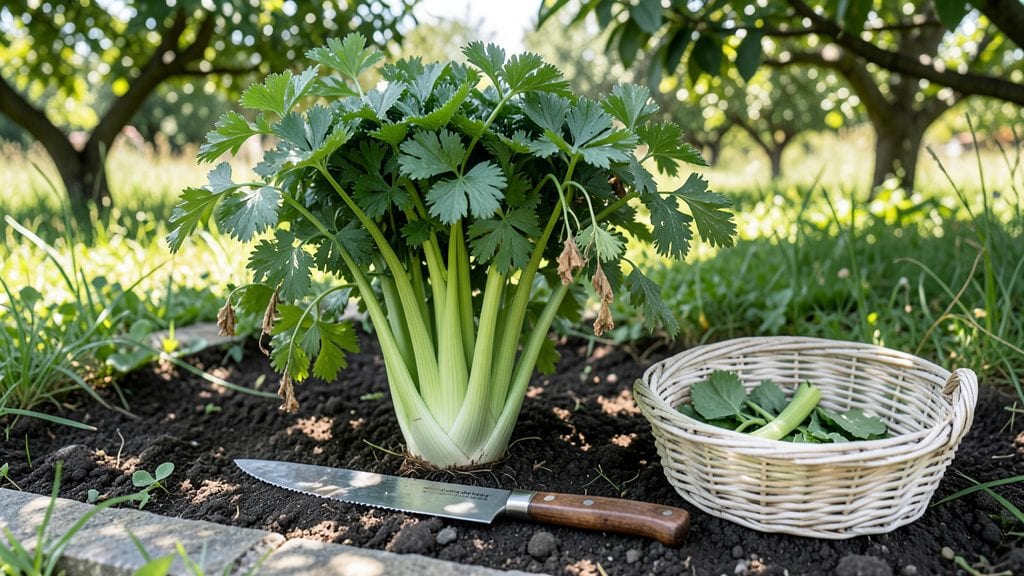
Harvesting garden celery stems at the right time means you get crisp, flavorful stalks without sacrificing future growth — and the secret lies in timing and technique.
There’s nothing worse than cutting into a tough, fibrous stalk that tastes more like cardboard than celery. But with the right approach, you can enjoy continuous harvests all season long, turning your garden into a never-ending snack station.
Celery thrives in USDA Zone 6a, where spring plantings in March-April yield harvests by June-July. The key is cutting stems when they’re 10-12 inches tall and tightly clustered, leaving the roots intact to spur regrowth.
Miss this window, and you’ll end up with bitter, woody stalks that no amount of cooking can save.
In this guide, I’ll walk you through exactly when to harvest, how to cut for regrowth, and the simple tricks to keep your 🥬 plants producing all season. No more wasted effort — just crisp, homegrown celery on demand.


Optimal harvesting time for garden celery stems
Harvesting your garden celery at the right time ensures tender, flavorful stalks while encouraging continuous regrowth. The key is balancing stem thickness, leaf color, and seasonal timing to maximize your yield without stressing the plant.
Unlike many vegetables, celery can regrow after proper harvesting, but only if you follow specific guidelines.
Celery plants typically reach harvest readiness 120-150 days after planting, depending on your USDA zone and variety. However, timing isn't just about days—it's about visual cues. Look for dark green leaves and stalks that are 10-12 inches tall with a 1-inch diameter at the base.
These signs indicate the perfect window for your first harvest.
Timing matters because harvesting too early results in thin, underdeveloped stalks, while waiting too long leads to woody, bitter celery that's less enjoyable to eat. The goal is to cut when the plant is at its peak tenderness, allowing it to regenerate for future harvests.
Seasonal timing also plays a role—spring-planted celery should be harvested in late summer, while fall-planted varieties are ready in late autumn.
Here’s a quick reference to help you identify the perfect moment to harvest your celery:
| Harvest Indicator | Ideal Specification | What to Avoid |
|---|---|---|
| Stem Thickness | 1 inch diameter at base | Thinner than ½ inch or thicker than 1.5 inches |
| Stalk Height | 10-12 inches tall | Under 8 inches (immature) or over 14 inches (woody) |
| Leaf Color | Deep green, crisp | Yellowing or wilted leaves |
| Soil Moisture | Consistently moist | Dry or waterlogged soil |
| Seasonal Timing | Late summer (spring plant) or late autumn (fall plant) | Harvesting before first frost or during extreme heat |
| Regrowth Potential | Leave 6-8 inches of stalk and 2-3 outer leaves | Cutting too close to the base or removing all leaves |
To encourage continuous regrowth, never remove more than one-third of the plant in a single harvest. Cut the outer stalks first, leaving the inner ones to mature. This method allows the plant to redirect energy toward new growth while still providing you with fresh celery.
For example, if you harvest the outer stalks in June, you can expect a second flush of growth by August, provided you maintain proper care.
One common mistake is over-harvesting, which weakens the plant and reduces future yields. Always leave at least 6-8 inches of stalk and 2-3 outer leaves to support regrowth. Additionally, avoid harvesting during extreme heat or cold snaps, as these conditions stress the plant and slow recovery.
Instead, aim for mild temperatures and consistent moisture to support rapid regrowth.
Seasonal timing is another critical factor. In USDA Zone 6a, spring-planted celery should be harvested in late July or August, while fall-planted varieties are best harvested in October or early November, just before the first frost.
If you live in a warmer climate, you can extend your harvest season by planting successive crops every 2-3 weeks from spring to early summer. This staggered approach ensures a steady supply of fresh celery throughout the growing season.
Pay close attention to the leaf color and stalk texture as you prepare for harvest. Healthy celery leaves should be vibrant green with a slight gloss, while the stalks should feel crisp and firm to the touch.
If you notice yellowing leaves or a woody texture, it’s a sign that the plant is either over-mature or under stress. In this case, it’s better to wait for the next harvest cycle rather than risk damaging the plant.
For maximum regrowth, always use a sharp knife or pruners to make clean cuts just above a leaf node. This reduces the risk of disease and promotes faster healing. After harvesting, water the plant deeply and apply a balanced fertilizer (like 5-10-10) to replenish nutrients.
With the right care, your celery plant can produce 2-3 harvests per season, providing you with a bountiful supply of fresh, homegrown celery.
Remember, the goal is to balance harvest with plant health. By following these guidelines, you’ll enjoy tender, flavorful celery while keeping your plants thriving for continuous harvests all season long. 🥬✂️🌱
Step-by-step guide to cutting celery for regrowth
Harvesting celery the right way can turn a single plant into a year-round harvest machine. The key lies in precise cutting techniques that preserve the root system while encouraging new growth.
With just a few simple steps, you can enjoy fresh celery for months instead of weeks. Let’s dive into the tools and methods that make regrowth possible.
Before you begin, gather your harvesting tools—a sharp knife or pruning shears is essential. Dull blades crush stems and invite disease, while clean cuts promote faster healing. I also recommend wearing gloves to protect your hands from the plant’s sap and rough texture.
Work during the cooler parts of the day to reduce stress on the plant and ensure crisp, flavorful regrowth.
Step-by-Step Celery Harvesting Guide
-
Step 1: Select Mature Stalks
Choose stalks that are 10-12 inches tall with a 1-inch diameter base. Avoid cutting the thinnest or most fibrous stalks—these won’t regrow well. -
Step 2: Sterilize Your Tools
Wipe your knife or shears with rubbing alcohol to prevent bacterial transfer. Clean cuts heal faster and reduce the risk of rot or disease. -
Step 3: Make the Cut
Angle your blade at 45 degrees and cut 1-2 inches above the soil line. Leave the bottom 2 inches of the stalk attached to the root—this protects the growing point. -
Step 4: Remove Outer Leaves
Strip away the outermost yellow or wilted leaves to redirect energy to new growth. Keep the inner green leaves intact—they’ll photosynthesize for regrowth. -
Step 5: Water Immediately
Give the plant 1 inch of water right after cutting to replenish moisture lost during harvest. Use a watering can with a fine rose attachment to avoid disturbing the soil. -
Step 6: Fertilize Lightly
Apply a balanced fertilizer (5-10-10) 3-5 days post-harvest to replenish nutrients. Stick to half-strength solution to avoid burning the roots. -
Step 7: Mulch for Protection
Add a 1-inch layer of mulch around the base to retain moisture and regulate soil temperature. Organic mulch like straw also deters weeds and pests.
One of the biggest mistakes gardeners make is cutting too close to the soil or removing too many stalks at once. This severely limits regrowth by damaging the plant’s energy reserves. Always leave at least 3-4 healthy stalks to ensure the plant can recover and produce new shoots.
If you notice yellowing leaves after harvesting, it’s often a sign of over-harvesting or nutrient deficiency.
After cutting, store your harvested celery in the refrigerator’s crisper drawer with a damp paper towel to maintain crispness. For regrowing plants, monitor soil moisture closely—celery roots are shallow and dry out quickly.
If the soil feels dry 1 inch below the surface, water immediately. Consistency is key to preventing bitter, tough regrowth.
With patience and precision, your celery plant can produce 3-4 harvests per season. The first regrowth may take 4-6 weeks, but subsequent cuts will come faster as the plant establishes itself.
Keep an eye out for pests like aphids, which love tender new growth—neem oil spray is my go-to for organic control.