
Trees
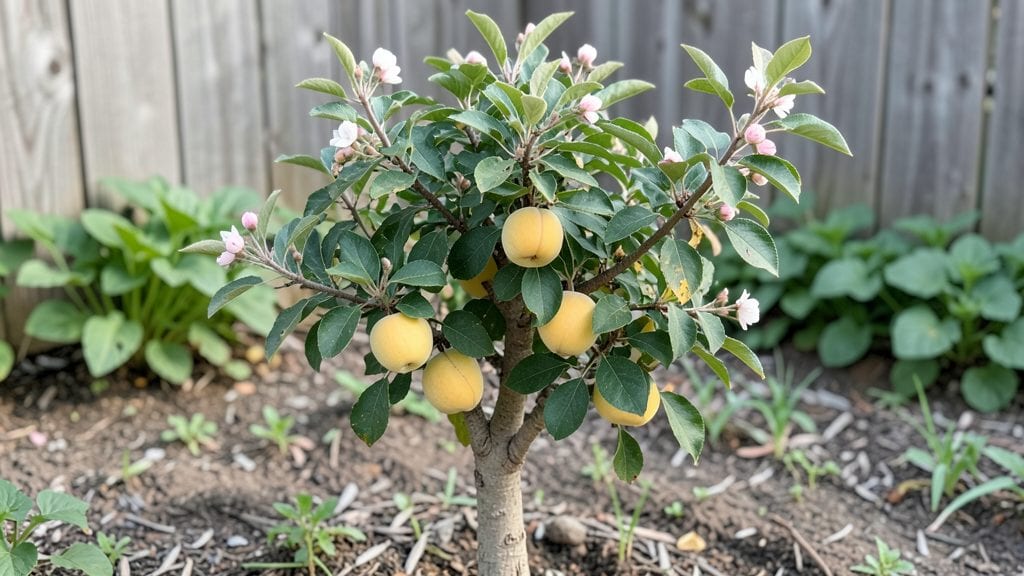
The Garden Gold Miniature Peach is the perfect peach tree for balconies, patios, and small yards—its compact size delivers full-sized fruit without the space. I planted mine last spring in a 15-gallon container, and by summer, it was heavy with golden-yellow peaches that tasted like summer in every bite.
The key to growing this dwarf variety isn’t just its size—it’s how it thrives where bigger peach trees fail.
This tree loves full sun but tolerates partial shade better than most peaches, making it ideal for urban gardens or areas with afternoon heat. Your soil should drain well—amend heavy clay with compost—and keep it slightly acidic (pH 6.0-6.5).
Water deeply once a week, but let the top inch of soil dry between waterings to prevent root rot. A self-pollinating variety, you only need one tree for fruit, though planting two nearby boosts production.
Prune in late winter to shape the tree and remove dead wood, then again after harvest to encourage next year’s growth. The real magic happens in summer when branches bend under the weight of 2-inch peaches—sweet, juicy, and perfect for snacking.
With proper care, you’ll harvest fruit for 10+ years, even in containers.
Best for USDA zones 5-9, this tree handles heat and cold better than most dwarfs, though young trees need winter protection in colder climates. Avoid overwatering in summer—this is the #1 mistake that leads to cracked fruit.
For year-round beauty, the spring blossoms and fall foliage make it a standout even when not fruiting.
📚 In This Guide
- What you need
- Instructions
- Tips and common mistakes
- Wrapping up and next steps
What you need
- ● Dwarf Garden Gold Miniature Peach Tree: 1 (bare-root or potted, 2–3 feet tall)
- ● Well-draining potting soil: 1 bag (10–15 gallons) or a mix of 60% topsoil, 30% compost, and 10% perlite/sand
- ● Container or planting site: For containers: 1 large pot (15–20 gallons) with drainage holes
- ● For in-ground: A hole twice as wide as the root ball, with loose soil
- ● Balanced fertilizer (10-10-10 or 20-20-20): 1–2 lbs (for soil amendment or slow-release granules)
- ● Mulch (wood chips or straw): 2–3 inches (to retain moisture and regulate temperature)
- ● Pruning shears: 1 pair (sterilized with rubbing alcohol)
- ● Garden gloves: 1 pair (for protection)
- ● Watering can or hose with gentle nozzle: 1 (for consistent moisture)
- ○ Staking (optional for containers): 1–2 bamboo stakes + soft tie (if needed for stability)
- ● Epsom salt (magnesium sulfate): 1 tbsp (for soil enrichment, especially if leaves yellow)
- ● Fruit tree spray (organic or copper-based): 1 bottle (to prevent pests/diseases)
- ● Drip irrigation system: 1 small kit (for automated watering)
- ● Sunlight meter or app: 1 (to track light exposure for optimal growth)
- ● Decorative rocks or pebbles: A handful (for aesthetic container styling)
Step-by-step guide to planting and caring for Garden Gold miniature peach trees
Here's the straightforward method I've used to grow thriving, fruit-bearing peach trees in tight spaces.
Choose the Right Location and Prepare the Soil
Miniature peach trees need at least 6 hours of direct sunlight daily, so pick a spot that gets full sun exposure. I always check the area in late afternoon when shadows are longest—this helps me visualize how much sun the space really gets. Avoid low spots where cold air collects, as peaches are sensitive to late frosts.
Before planting, loosen the soil to a depth of 12 inches using a garden fork. Miniature peaches thrive in well-draining soil with a pH between 6.0 and 7.0. If your soil is heavy clay, mix in 2-3 inches of compost to improve drainage and fertility. I like to test my soil first with a simple pH kit to make sure it's in the right range before planting.
Plant Your Miniature Peach Tree at the Right Depth
Dig a hole twice as wide as the root ball but only as deep as the container it came in. This prevents burying the graft union (the bulge near the base of the tree), which can cause disease. Gently remove the tree from its container and place it in the hole so the top of the root ball sits just above ground level. Here's the thing—if the graft union is below soil level, the tree will grow a weak, non-dwarf root system and lose its compact shape.
Backfill the hole with native soil, tamping lightly as you go to remove air pockets. Water deeply to settle the soil and eliminate gaps. I always add a 2-inch layer of mulch (like wood chips) around the base, keeping it 3 inches away from the trunk to prevent rot. This helps retain moisture while protecting the roots from temperature swings.
☀️ Step 3: Provide Proper Watering and Sunlight for Establishment
Water your new miniature peach tree deeply 2-3 times per week for the first month, ensuring the soil stays evenly moist but not soggy. You'll know it's right when the top 2 inches of soil feel damp to the touch. Overwatering is a common mistake—peach trees hate "wet feet" and can develop root rot. After the first month, reduce to once a week unless you're in extreme heat or drought.
During the first growing season, focus on sunlight exposure. If your tree starts looking leggy or pale, it's not getting enough light. I've found that a south-facing window works for container-grown trees, but for in-ground planting, full sun is non-negotiable. Young trees may need protection from strong afternoon sun in hot climates—use shade cloth if leaves start curling.
✂️ Step 4: Prune for Shape and Fruit Production
Prune your miniature peach tree in late winter or early spring before new growth begins. Remove any dead, diseased, or crossing branches first—these compete with healthy growth and can spread problems. Then, thin out branches to open the center of the tree, allowing better airflow and sunlight penetration. I aim to keep the tree open and vase-shaped, which encourages fruit production and reduces disease risk.
Never remove more than 25% of the tree's foliage in one pruning session. You'll see new growth emerge within 2-3 weeks—this is your signal that the tree is recovering well. For the first two years, focus on shaping rather than fruit production. Miniature peaches bear fruit on new wood, so aggressive pruning now can reduce next year's harvest.
🌱 Step 5: Fertilize and Protect for Long-Term Health
Feed your miniature peach tree with a balanced 10-10-10 fertilizer in early spring when new leaves appear. Use half the recommended dose for dwarf varieties—they don't need heavy feeding. I like to work the fertilizer into the soil around the drip line (the outer edge of the tree's canopy) rather than piling it at the base. This encourages root growth where it's needed most.
Watch for peach tree borers and aphids—common pests that can defoliate or weaken your tree. I treat infestations with neem oil (mix 1 tablespoon per gallon of water) and spray in the early morning or evening to avoid harming beneficial insects. For frost-sensitive varieties, cover young trees with frost cloth on nights when temperatures drop below 28°F. Miniature peaches are tough, but young trees need extra protection.
Tips & tricks for perfect Garden Gold miniature peach trees
These game-changing tips will help you nurture a thriving, fruit-bearing miniature peach tree that fits perfectly in small spaces while delivering year-round beauty.
Sunlight Secret: That 6 hours of daily sunlight is non-negotiable, but here's the thing—morning sun is more valuable than afternoon. Position your tree to catch those first rays, which helps prevent leaf scorch in hot afternoons. I've seen trees in full sun all day struggle in summer heat, while those with morning sun and afternoon shade thrive. For container trees, rotate the pot weekly to ensure even sunlight exposure on all sides.
Soil Prep Game-Changer: When loosening that 12-inch depth of soil, don't just break it up—mix in a handful of perlite or coarse sand if your soil is naturally dense. This creates tiny air pockets that improve drainage while maintaining moisture. I've found that adding a cup of bone meal to the planting hole at this stage gives roots a phosphorus boost for stronger establishment. The pH test is crucial—if your soil is outside 6.0-7.0, adjust with lime (to raise) or sulfur (to lower) before planting.
Planting Depth Critical: That graft union is the heart of your dwarf tree's compact growth habit, so planting it just above soil level is absolutely essential. Here's how to check: After placing the tree, the graft union should be about 1-2 inches above the finished soil line. If you're unsure, mark the correct depth on the pot before planting. I've seen too many gardeners bury this junction, which causes the tree to revert to standard size and lose its dwarf characteristics.
Watering Wisdom: Those first 2-3 weeks are critical—water deeply until you see moisture reach 6 inches down. A simple test is to stick your finger 2 inches into the soil; if it's dry, water again. I've found that using a soaker hose buried 2 inches deep delivers water right to the roots without wetting the leaves, which helps prevent fungal issues. Remember, peach trees hate soggy roots, so always let the top 2 inches dry between waterings after the initial establishment period.
Pro Tips for Garden Gold Miniature Peach
- These game-changing tips will help you nurture a thriving, fruit-bearing miniature peach tree that fits perfectly in small spaces while delivering year-round beauty.
- Sunlight Secret: That 6 hours of daily sunlight is non-negotiable, but here's the thing—morning sun is more valuable than afternoon.
- Soil Prep Game-Changer: When loosening that 12-inch depth of soil, don't just break it up—mix in a handful of perlite or coarse sand if your soil is naturally dense.
Frequently asked questions
Got questions about growing Garden Gold Miniature Peach trees? You're not alone! Here are some of the most common queries—plus straightforward answers to help you thrive with this adorable dwarf variety.
How big do Garden Gold Miniature Peach trees actually get?
The Garden Gold stays compact, typically reaching 6–8 feet tall and wide at maturity. Perfect for containers, small yards, or even sunny patios! Just ensure it has 6+ hours of sunlight daily to keep it productive. Prune lightly in late winter to maintain its tidy shape.
When is the best time to plant a Garden Gold Miniature Peach?
Plant in early spring or fall when soil temps are above 60°F but not scorching. Avoid summer heatwaves—roots need time to establish before stress. If planting in containers, use well-draining soil and a pot at least 18 inches deep with drainage holes.
How do I encourage more fruit production?
These trees are self-pollinating, but cross-pollination with another peach variety nearby can boost yields. Prune to improve airflow, fertilize lightly in early spring with citrus-soluble fertilizer, and water deeply 1–2 times per week during dry spells. Avoid overwatering—soggy roots = fewer peaches!
What pests or diseases should I watch for?
Common issues include aphids, peach leaf curl (fungal), and borers. Prevent leaf curl with copper fungicide in late fall. For pests, spray with neem oil or insecticidal soap early in the season. Keep the area around the tree weed-free to deter critters.
Can Garden Gold Miniature Peaches survive cold winters?
They’re hardy to USDA Zones 5–9, but young trees may need winter protection (like burlap wraps or mulch) in colder zones. Prune damaged branches in early spring after the last frost. Mature trees handle chill well, but avoid planting in frost pockets.
What’s a good alternative if I don’t have space for a tree?
Try dwarf peach bush varieties (like ‘Bonanza’ or ‘Redhaven’) or grow Garden Gold in a large container (20+ gallons) with seasonal winter moves to a garage or shed. Bonus: Peach ‘Bonanza’ bushes produce fruit in just 2–3 years!
Wrapping up and next steps
The Garden Gold Miniature Peach is a dream come true for small-space gardeners—packing big flavor, stunning blooms, and year-round charm into a compact package! 🌸 Whether you’re a beginner or a seasoned grower, this dwarf variety proves that big rewards don’t require big yards.
With the right care, you’ll enjoy sweet peaches, fragrant flowers, and even winter interest, all while keeping your landscape lush and low-maintenance.
Ready to transform your space? Start by selecting your spot, gathering supplies, and planting your tree with confidence. Then, watch your little garden grow into a fruitful, fragrant haven—one bite-sized peach at a time! 🍑✨