
Fertilization
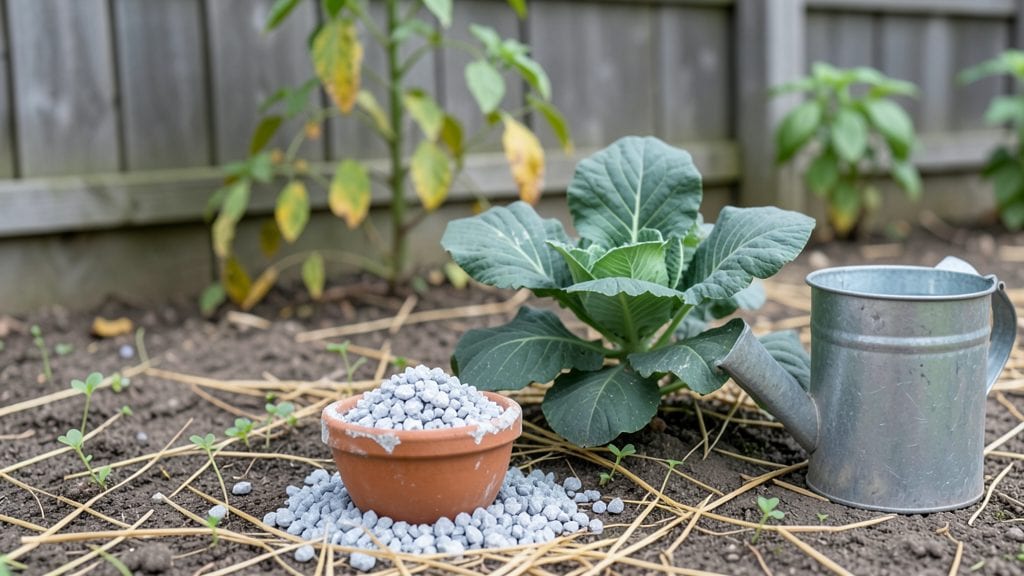
Using aluminum sulfate in gardening lowers soil pH and acidifies alkaline soils, making it ideal for plants like blueberries, azaleas, and rhododendrons that thrive in acidic conditions. Apply 5–10 pounds per 100 square feet, following soil test recommendations, and water thoroughly to prevent plant damage.
Aluminum sulfate works by releasing hydrogen ions when dissolved in water, which actively reduces soil pH levels.
This chemical process also provides essential nutrients like sulfur and aluminum, though overuse can lead to aluminum toxicity in plants. 🔥 For best results, test your soil first—alkaline soils (pH 7.0+) respond fastest, while sandy soils may need more frequent applications compared to clay.
Always mix it into the top 2-3 inches of soil and water immediately to distribute evenly.
This amendment is particularly valuable for acid-loving plants that struggle in neutral or alkaline conditions. For example, blueberries require pH levels between 4.5 and 5.5 to thrive, while azaleas prefer 5.0-6.0.
The key is patience—don't expect instant results; soil pH adjustment typically takes 2-4 weeks to stabilize, so monitor progress with regular soil tests. Overapplication can harm beneficial soil microbes, so follow package guidelines closely.
💡 In This Article
- How Aluminum Sulfate Adjusts Soil pH Chemistry
- Safe Application Rates and Plant-Specific Uses
How aluminum sulfate adjusts soil pH chemistry
When aluminum sulfate dissolves in soil moisture, it undergoes hydrolysis—a chemical reaction where water molecules split the compound into aluminum ions (Al³⁺) and hydrogen ions (H⁺). These hydrogen ions are what drive the pH downward, creating a more acidic environment.
The process releases about 0.5-1.0 pounds of sulfur per 100 pounds of aluminum sulfate, providing both acidification and an essential nutrient for plant growth. This dual action makes it more effective than pure sulfur alone, which requires microbial oxidation to release acidity over time.
The acidifying power of aluminum sulfate is roughly 3-4 times stronger per pound than elemental sulfur but faster-acting. For example, while sulfur may take 3-6 months to fully acidify soil, aluminum sulfate can show noticeable pH changes within 2-4 weeks.
However, peat moss—a natural organic amendment—only provides minor pH adjustment (0.2-0.5 pH units) and lacks the nutrient boost. The key difference lies in how quickly each amendment releases hydrogen ions into the soil solution.
Soil texture dramatically affects how aluminum sulfate works. In sandy soils, the granular particles create larger air pockets, allowing water to drain quickly—meaning you'll need 10-20% more product to achieve the same pH drop as in clay soils.
Clay soils, with their tight particle structure, hold moisture longer, which slows the reaction but makes the amendment more efficient. This is why gardeners often see better results in clay-heavy gardens with a single application, while sandy soils may require 2-3 applications per season to maintain optimal pH levels.
What most gardeners don't realize is that aluminum sulfate also temporarily increases soil aluminum levels, which can be toxic to plants at high concentrations. While acid-loving plants like blueberries can tolerate some aluminum, sensitive species like tomatoes or peppers may show stunted growth if overused.
The solution? Always conduct a soil test before applying, and never exceed 10 pounds per 100 square feet in a single treatment. For long-term acidification, split applications into 2-3 smaller doses spaced 4-6 weeks apart.
Here's a quick comparison of acidifying strength per pound of material:
- Aluminum sulfate: Drops pH by 1.0-1.5 units (fast-acting, 2-4 weeks)
- Elemental sulfur: Drops pH by 0.3-0.5 units (slow, 3-6 months)
- Peat moss: Drops pH by 0.2-0.5 units (very slow, organic matter breakdown)
The science behind this involves the buffer capacity of your soil—the higher the clay content, the more resistant it is to pH changes. For instance, a clay soil might only drop 0.5 pH units from a single application, while sandy soil could see a 1.0-1.2 unit drop.
This is why professional gardeners always recommend testing before and after application to avoid overshooting your target pH. 💫