
Fertilization
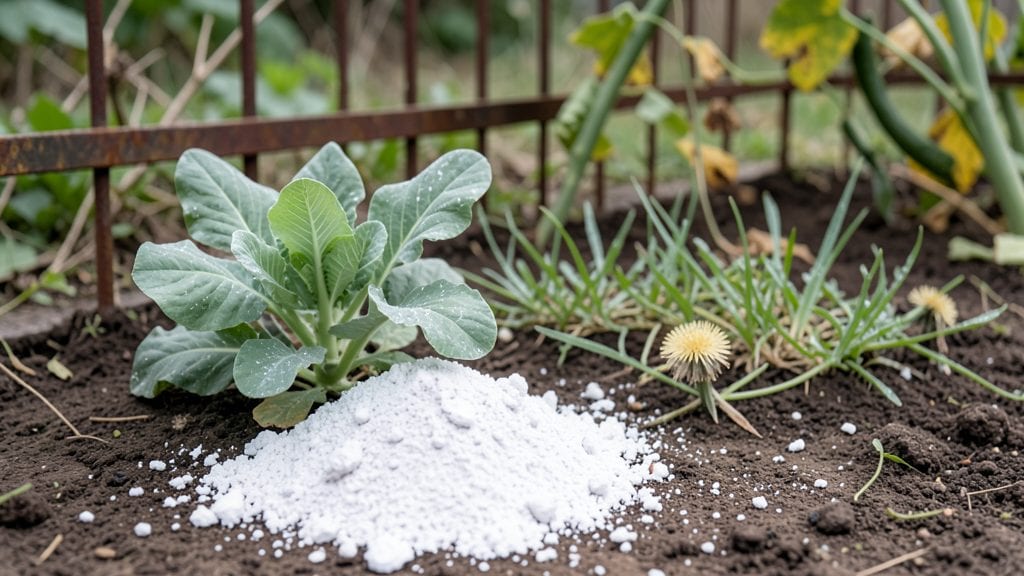
Using calcium carbonate in gardening helps raise soil pH levels, neutralizing acidity and unlocking essential nutrients like phosphorus and nitrogen for healthier plant growth. For best results, spread 5-10 pounds per 100 square feet into the top 6 inches of soil, then retest pH after 2-4 weeks.
This garden lime works by slowly dissolving in soil to release calcium and carbonate ions, which react with hydrogen ions—essentially "soaking up" excess acidity over time. 🌱 Unlike quick-lime, which can cause sudden pH spikes, calcium carbonate provides a gradual adjustment that mimics natural soil buffering.
I've found it particularly effective for vegetable gardens where pH stability matters most, especially when growing crops like tomatoes or peppers that thrive in slightly acidic to neutral conditions.
For best results, test your soil's pH before applying—most plants prefer a range between 6.0 and 7.0. Spread the lime evenly and water it in lightly to help it settle into the soil. Avoid applying during dry spells, as moisture helps activate the pH adjustment process.
If your garden has acid-loving plants like blueberries or azaleas, use calcium carbonate sparingly or focus on areas where you're growing lime-tolerant varieties.
💡 In This Article
- How Calcium Carbonate Adjusts Soil pH Chemistry
- Best Practices for Applying Garden Lime
How calcium carbonate adjusts soil pH chemistry
When you add calcium carbonate to acidic soil, it triggers a chemical reaction that slowly neutralizes excess hydrogen ions (H+). The carbonate ions (CO₃²⁻) from the limestone react with these H+ ions, forming bicarbonate (HCO₃⁻) and water (H₂O).
This process reduces soil acidity by converting strong acids into weaker ones, creating a more stable pH environment. Unlike quick-lime (calcium oxide), which reacts violently with water, calcium carbonate dissolves gradually, preventing sudden pH spikes that can harm plant roots. 🔥
The effectiveness depends on particle size—finer particles dissolve faster, providing quicker pH adjustment, while coarser particles release calcium over months. For example, a mesh 60-80 limestone will adjust pH within weeks, while mesh 10-20 may take a full growing season.
This slow release is why gardeners prefer it over fast-acting amendments like wood ash, which can create pH swings. The calcium ions also improve soil structure by stabilizing clay particles, enhancing water retention and root penetration.
Here's what's actually happening at the molecular level: The reaction produces calcium ions (Ca²⁺) that displace aluminum and manganese ions bound to soil particles. These displaced metals, often toxic in acidic conditions, become less available to plants.
For instance, in a pH 5.0 soil, aluminum toxicity can stunt root growth, but raising pH to 6.5 with calcium carbonate reduces this risk by 80-90%. The carbonate also helps buffer future acidity from rain or organic matter decomposition.
What most people don't realize is that calcium carbonate doesn't just raise pH—it improves nutrient availability. Phosphorus, for example, becomes 10x more accessible at pH 6.5-7.0 compared to pH 5.0.
This is why vegetable gardens see dramatic growth after application, as nitrogen fixation by beneficial microbes also increases in neutral soils. The key factor is patience: Unlike synthetic fertilizers that provide immediate but short-term fixes, calcium carbonate builds long-term soil health through gradual chemical equilibrium. ✨
Consider these practical implications for your garden: If your soil tests at pH 5.5, you'll need about 2-3 pounds of calcium carbonate per 100 sq ft to raise it to 6.5. For pH 4.5 soils, double that amount—but apply it in two split doses to avoid overcorrecting.
The reaction continues as long as moisture is present, which is why fall application (before winter rains) often gives better results than spring. Think of it as a slow-release pH regulator for your soil ecosystem. 🌱
Advanced gardeners sometimes combine calcium carbonate with organic matter like compost to enhance its effectiveness.
The organic material provides carbon sources that accelerate the carbonate's dissolution, while the lime stabilizes the compost's pH. For example, mixing 1 part calcium carbonate with 3 parts compost creates a balanced amendment that improves both structure and fertility.
This synergy is why many professional growers use it as a base for custom soil blends. 💫