
Tools
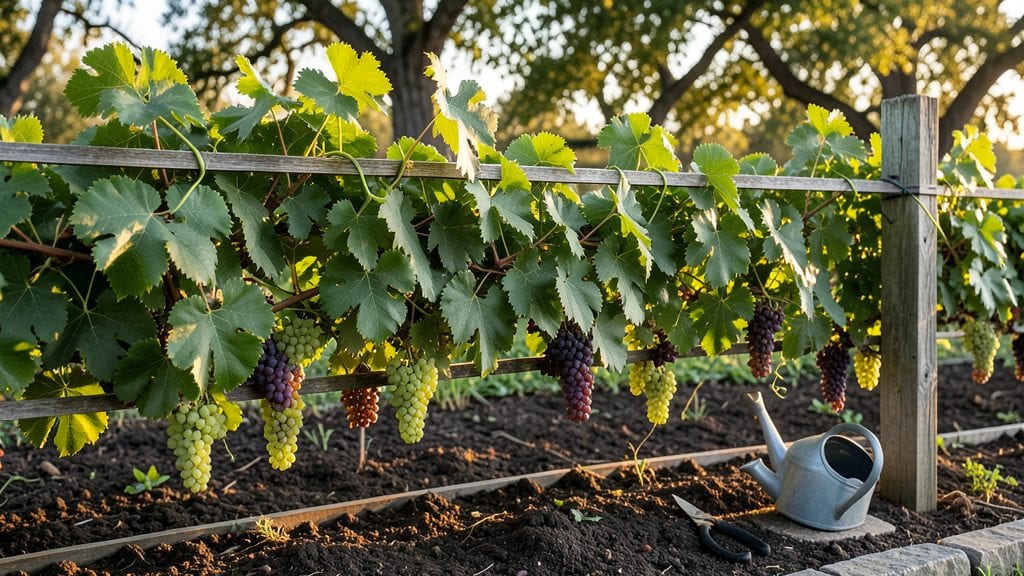
Growing a garden grape vine transforms a shady corner into a sunlit harvest. 🌿 I learned the hard way that these vines need full sun and the right support to thrive—without it, they sprawl and produce sparse fruit.
The secret lies in pairing the perfect climbing structure with well-drained soil, and once you get it right, you’ll enjoy clusters of sweet grapes for years.
Start with a sturdy trellis or arbor that’s at least 6 feet tall, giving vines room to climb and spread. Varieties like Concord or Thompson Seedless do best in zones 5-9, but even in cooler areas, a south-facing wall or fence works wonders.
The soil should be loose and rich in organic matter—grape roots hate soggy feet, so raised beds help in heavy clay.
By late summer, you’ll see thick canes and heavy clusters if you prune correctly in winter. Cut back old growth to encourage new shoots, and water deeply but infrequently—overwatering leads to weak vines and rot. With patience, your structure becomes a productive vineyard, not just a decorative feature.
Common mistakes? Planting too deep or skipping winter pruning. But once you master these basics, you’ll harvest grapes that outshine store-bought—and your neighbors will ask for cuttings. The first year is about setup; the second brings the payoff.
📚 In This Guide
- What you need
- Instructions
- Tips and common mistakes
- Wrapping up and next steps
What you need
- ● Grapevine plants: Choose disease-resistant varieties like Concord, Thompson Seedless, or Cabernet Sauvignon. Buy 1-3 healthy, bare-root plants from a nursery.
- ● Climbing structure: Trellis or arbor: A sturdy, 6-8 ft tall structure (wooden, metal, or PVC). Ensure it’s at least 4 ft wide for proper airflow.
- ● Wire or cables: 12-14 gauge galvanized wire (20-30 ft) for training vines.
- ● Soil amendments: Compost (5-10 gallons) to enrich soil.
- ● Well-draining potting mix (if planting in containers).
- ● Mulch: Straw or wood chips (2-3 inches) to retain moisture and suppress weeds.
- ● Pruning tools: Bypass pruners (for clean cuts).
- ● Loppers (for thicker branches).
- ● Garden tools: Trowel, shovel, and gloves (heavy-duty for thorny vines!).
- ● Support tools: Zip ties or soft plant ties (for securing vines to trellis).
- ● Drip irrigation system or soaker hose (for consistent watering).
- ● Fertilizer (balanced 10-10-10 or grape-specific formula).
- ● Fungicide (copper-based) to prevent mildew.
- ● Shade cloth (for young vines in hot climates).
Step-by-Step instructions for planting and training garden grape vines
Here's how to get your grapevines thriving with strong growth and abundant fruit.
🌱 Step 1: Choose and Prepare the Planting Site
Grapevines need full sun—at least 6-8 hours daily—so pick a south or southwest-facing spot. The soil should drain well but retain moisture, so avoid low-lying areas where water pools. I dig a hole twice as wide as the root ball but only as deep, since planting too deep encourages root rot.
Before placing the vine, mix the 4 cubic feet of compost into the native soil at the bottom of the hole. This improves drainage and provides nutrients. Grapevines are heavy feeders, so I always add compost to give them a strong start. Avoid fresh manure—it can burn the roots.
🪴 Step 2: Plant the Vine and Install the Trellis
Position the vine so the graft union (the bump near the base) sits 2-3 inches above soil level. This ensures the vine can send out roots below the graft while protecting it from rot. Backfill the hole with soil, pressing gently to remove air pockets, then water deeply to settle everything.
Install your 10-foot trellis or arbor immediately after planting. Grapevines need support from day one to grow upright. I use a sturdy metal or wooden frame and secure it firmly into the ground. The vine will climb the trellis as it grows, so position it where it can reach the structure without stretching.
☀️ Step 3: Train the Vine and Prune for Structure
In their first year, grapevines focus on root and shoot growth. I let the main stem grow freely up the trellis, tying it loosely with soft cloth or plant ties every 2-3 feet to prevent wind damage. Avoid tight ties—they can girdle the stem as the vine thickens.
By late winter of the second year, prune back the main stem to 3-4 feet and select 2-3 strong canes to form the primary arms. These will become your vine’s permanent structure. You’ll see buds swelling in early spring—that’s your cue to start shaping the vine for fruit production.
💧 Step 4: Water and Fertilize for Healthy Growth
Water deeply once a week during the first growing season, ensuring the soil stays moist but not soggy. Grapevines have deep roots, so aim for 1-2 inches of water per week. I check by sticking my finger 2 inches into the soil—if it’s dry, it’s time to water.
Apply a balanced 10-10-10 fertilizer in early spring and again after harvest. Follow the package rates, but cut back by half if your soil is already rich from compost. Over-fertilizing leads to lush foliage but fewer grapes. Watch for new leaves in spring—they’ll tell you if the vine is happy or struggling.
✂️ Step 5: Prune and Harvest for Maximum Yield
Every winter, prune back the vine to remove dead or weak wood. Keep only the strongest canes and cut back last year’s growth to 4-6 buds per cane. This encourages fruit production while maintaining airflow to prevent disease. I use sharp pruners and make clean cuts at a slight angle to avoid tearing the bark.
Harvest grapes when they’re fully colored and slightly soft to the touch. This usually happens in late summer or early fall, depending on your climate. Pick in the morning when the fruit is cool—it keeps better and tastes sweeter. Store unwashed grapes in the fridge for up to 2 weeks.
Tips & tricks for perfect grape vine training
Here's what I've learned after years of growing my own grapevines—these tricks make all the difference between a struggling vine and a thriving one.
Sunlight Secret: The 6-8 hours of daily sunlight mentioned in Step 1 is non-negotiable. If your location gets less than that, consider a trellis system that can be rotated seasonally to follow the sun's arc. I've seen vines near windows or fences get enough reflected light to make a difference. Just watch for leaves touching the structure—this can block sunlight from reaching inner leaves and reduce fruit production.
Trellis Placement: When installing your 10-foot trellis in Step 2, position it so the vine grows toward the south or southwest. This maximizes sunlight exposure throughout the day. I also recommend adding crossbars every 3-4 feet to create a lattice effect—this gives the vine more surface area to climb and prevents the main stem from becoming too heavy. Think of it like a grapevine ladder!
Pruning Precision: In Step 5, when pruning back to 4-6 buds per cane, focus on buds that face outward from the trellis. These buds will produce fruit that gets maximum sunlight and air circulation. I use a permanent marker to circle the buds I want to keep before making my cuts—this helps me visualize the final shape. Also, always prune just outside a bud (about 1/8 inch away) to encourage new growth from that exact spot.
Watering Wisdom: The once-weekly watering in Step 4 works best with deep, slow watering rather than quick sprinkles. I use a soaker hose buried 2 inches below the surface to deliver that 1-2 inches of water directly to the roots where your finger test showed dryness. This prevents surface evaporation and encourages deep root growth. In extreme heat, I water twice weekly but check that 2-inch soil depth first.
Pro Tips for Garden Grape Vine
- Here's what I've learned after years of growing my own grapevines—these tricks make all the difference between a struggling vine and a thriving one.
- Sunlight Secret: The 6-8 hours of daily sunlight mentioned in Step 1 is non-negotiable.
- Trellis Placement: When installing your 10-foot trellis in Step 2, position it so the vine grows toward the south or southwest.
Frequently asked questions
Got questions about growing garden grape vines? You’re not alone!
Here are answers to the most common concerns—from pruning to pests and everything in between.
How do I know when my grape vine is ready to harvest?
Harvest time depends on your grape variety, but look for these signs: grapes should plump, change color (from green to purple/red), and feel slightly soft when gently squeezed. For table grapes, they should also pull away easily from the stem. Test a few clusters first—some varieties (like Concord) are best picked when slightly underripe for better flavor!
Can I grow grape vines in containers? What’s the best setup?
Choose a large container (at least 15–20 gallons) with drainage holes and use a well-draining potting mix. Dwarf or semi-dwarf varieties like ‘Thompson Seedless’ or ‘Black Monukka’ thrive in pots. Place the container in full sun (6+ hours daily) and train the vine along a trellis or wire frame. Just remember: container vines may need more frequent watering and winter protection in cold climates.
When and how should I prune my grape vine?
Prune in late winter or early spring (before buds swell) to shape the vine and encourage fruit production. Remove:
- Dead or diseased wood (cut back to healthy tissue).
- Suckers (vigorous shoots growing from the base or trunk).
- Weak or crossing canes to improve airflow.
What are the most common grape vine pests, and how do I prevent them?
Watch for:
- Japanese beetles: Handpick them or use neem oil.
- Grape berry moths: Apply row covers during flowering.
- Aphids or spider mites: Spray with water (for aphids) or insecticidal soap (for mites).
- Birds: Cover clusters with netting when they’re half-grown.
Do grape vines need winter protection? How do I overwinter them?
In USDA Zones 4–6, young vines or tender varieties need protection. After the first hard frost, prune back canes to 4–6 buds, then wrap the trellis or vine in burlap or frost cloth. Mound 6–12 inches of mulch (straw or leaves) around the base. In Zone 7+, established vines often survive without extra care, but a light mulch helps.
Wrapping up and next steps
Growing your own garden grape vine is a rewarding journey—one that transforms your space into a lush, productive paradise while maximizing sunlight and efficiency.
Whether you're a beginner or a seasoned gardener, the key lies in choosing the right structure, providing proper care, and embracing patience as your vines flourish into bountiful harvests. 🌱
Now that you’re armed with the knowledge, it’s time to roll up your sleeves and get planting! Start by sketching your ideal trellis design, gather your supplies, and watch your grapevine thrive. Happy growing—your future harvest awaits! 🍇
- Next Step: Pick your favorite grape variety and begin planning your trellis today!