
Tools
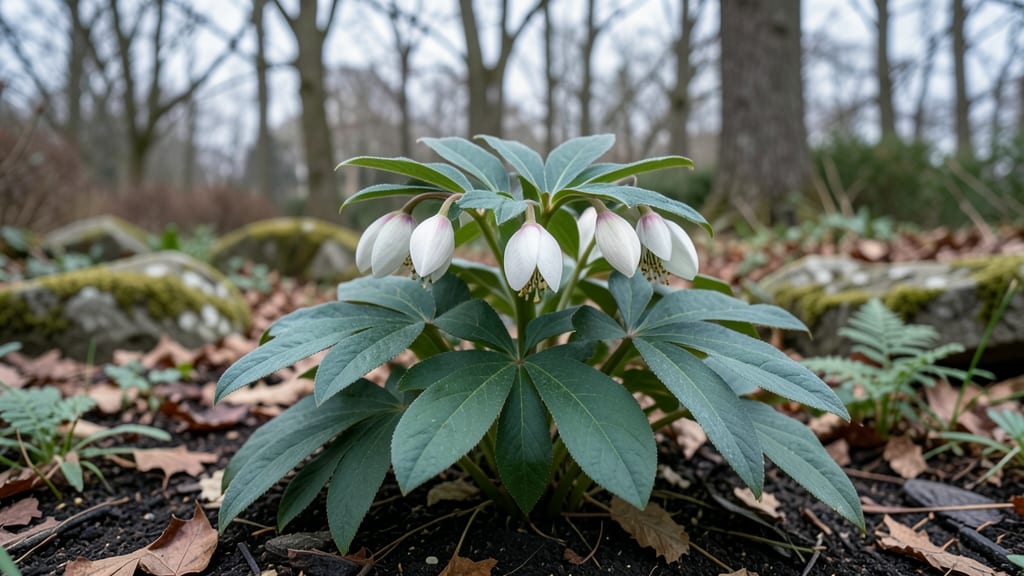
Hellebores in gardens thrive because they handle shade year-round, bloom from late fall to early spring with graceful flowers, and grow best in consistently moist yet well-draining soil with minimal direct sunlight.
These hardy perennials are nature's secret weapon for shady spots, thanks to their deep roots that access moisture while their broad leaves capture even faint light. 🌿 Unlike sun-loving plants, hellebores grow slowly—this means they outlast weeds and require less frequent maintenance.
I've seen them flourish under mature trees where nothing else survives, proving they're the ultimate low-light champion for gardeners with limited sun exposure.
For best results, plant them in well-amended soil with 30-50% organic matter and space them 12-18 inches apart to prevent overcrowding. Their early blooms provide vital nectar for pollinators when few other flowers are available, making them both practical and beautiful additions to any garden.
💡 In This Article
- Why Hellebores Excel in Low-Light Gardens
- Step-by-Step Guide to Planting Hellebores for Maximum Impact
Why hellebores excel in low-light gardens
Hellebores have evolved a unique photosynthetic strategy that lets them thrive where other plants would struggle. Their leaves contain a high concentration of chlorophyll b relative to chlorophyll a, which is more efficient at capturing low-light wavelengths (around 400-500 nanometers) that penetrate dense canopies.
This adaptation allows them to photosynthesize effectively under 10-20% of full sunlight, while most shade-tolerant plants like hostas need at least 30-40%.
Their deep, fibrous root systems (reaching 12-18 inches down) access moisture from deeper soil layers, giving them a competitive edge in dry shade.
This root structure also helps them outcompete weeds, which typically have shallow, less extensive root systems. 🌱 The slow growth rate—only about 3-6 inches per year—means they conserve energy efficiently, making them resilient in marginal conditions where faster-growing plants would deplete resources.
Compared to ferns (which need 20-30% light and high humidity) or hostas (requiring 30-50% light), hellebores handle drier shade better. Their waxy leaf coating reduces water loss, while their broad leaf surface area maximizes light absorption.
This combination explains why they often outperform other shade plants in woodland gardens or under dense tree canopies where light is filtered through leaves.
What most gardeners don't realize is how their growth habit suppresses weeds. Hellebores form dense clumps that shade the soil, preventing weed seeds from germinating. Their early spring blooms also time perfectly with late-winter pollinators like bees, which emerge when few other flowers are available.
This dual benefit—low-light tolerance and ecological support—makes them a garden designer's secret weapon for challenging spots.
Their shade resilience isn't just about light capture—it's a full-system adaptation. The combination of efficient chlorophyll, deep roots, and slow growth creates a plant that thrives where others fail.
Even in deep shade (under 10% light), they'll produce flowers, though with slightly reduced vigor compared to partial shade (20-30% light). 💫