
Advice
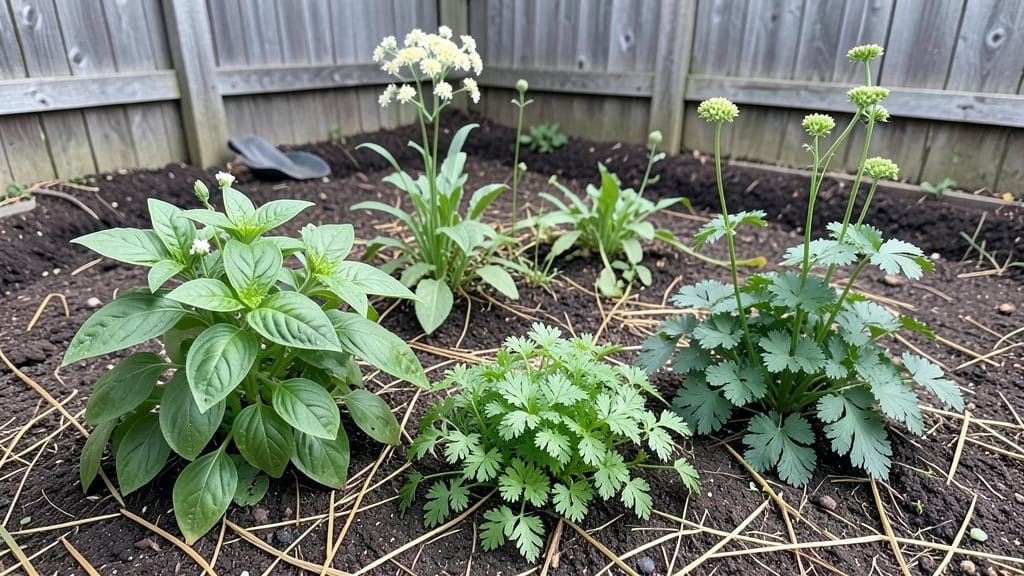
Herbs gardening thrives with fast-growing varieties like basil, cilantro, and parsley, which sprout in 7–14 days when planted in well-draining soil with full sun exposure. Container gardening works best for small spaces, while companion planting boosts growth and deters pests naturally.
Starting an herbs garden is one of the most rewarding ways to bring fresh flavors to your kitchen. 🌱 The key to success lies in selecting varieties that sprout quickly and thrive with minimal fuss—like basil, which can go from seed to harvest in just two weeks.
I’ve found that container gardening transforms even tiny balconies into productive green spaces, while pairing herbs like dill with tomatoes naturally repels pests without chemicals. The right soil mix and sunlight make all the difference, especially in urban settings where space is limited.
For those new to gardening, the fastest results come from herbs that germinate in under two weeks and mature in about six weeks. Chives and mint are particularly hardy, while parsley’s slightly slower start pays off with its long harvest window.
I always recommend keeping a small notebook to track planting dates and growth milestones—it helps identify what works best in your specific climate. Whether you’re growing on a windowsill or in a raised bed, consistency in watering and sunlight will give you the lush, flavorful herbs you crave.
💡 In This Article
- Fastest-Growing Herbs for Beginner Gardeners
- Pro Tips for Year-Round Herb Cultivation
Fastest-growing herbs for beginner gardeners
When it comes to herbs gardening, speed isn't just about quick harvests—it's about understanding how these plants adapt to your environment.
The top 10 fastest-growing herbs like chives (5-7 days germination), dill (7-14 days), and mint (14-21 days) outperform slower varieties because they've evolved to thrive in disturbed, nutrient-rich soils.
Their shallow root systems allow them to absorb moisture and nutrients rapidly, which is why they sprout so quickly even in containers. 🌱 The science here involves their high seedling vigor, a trait bred into many culinary herbs over centuries of cultivation.
Let's break down the specifics: chives need 4-6 hours of sunlight daily and prefer well-draining soil with a pH of 6.0-7.0, while dill thrives in full sun (6+ hours) and tolerates slightly alkaline soil (7.0-8.0).
Mint, however, is the most adaptable, growing in partial shade (3-4 hours of sun) and even moist soil conditions. Spacing requirements vary dramatically—chives should be planted 3-4 inches apart while dill needs 12-18 inches to prevent overcrowding.
This variation explains why some herbs dominate small spaces while others need room to spread.
What makes these herbs stand out is their growth rate comparison: while parsley takes 21-30 days to germinate, chives and dill can be harvested in just 4-6 weeks from planting.
The key factor here is their rapid cell division during the vegetative stage, fueled by efficient photosynthesis in optimal light conditions. For example, basil's large leaves develop 2-3 new leaves daily under ideal conditions, compared to rosemary's slower 1 leaf every 5-7 days.
This biological difference means you'll see visible growth within days rather than weeks.
Here's what most beginners don't realize: these fast-growing herbs actually outcompete weeds more effectively because they establish dense foliage quickly. Their aggressive growth habit creates a natural ground cover that blocks light to weed seeds.
For instance, mint spreads via underground runners that can suppress 80-90% of weed growth when planted densely. This ecological advantage means less maintenance for you—just consistent watering (1 inch per week) and occasional pruning to encourage bushier growth. The trade-off?
Some varieties like mint can become invasive if not contained properly.
Consider these growth rate comparisons when planning your garden layout:
- Germination speed: Chives (5-7 days) > Dill (7-14 days) > Basil (7-14 days) > Parsley (21-30 days)
- Time to first harvest: Cilantro (3-4 weeks) = Dill (4-6 weeks) > Mint (6-8 weeks)
- Sunlight needs: Dill (6+ hours) > Basil (5-6 hours) > Chives (4-6 hours) > Mint (3-6 hours)
The secret to their success lies in their dual-purpose growth strategy: they produce both leaves and flowers simultaneously, which diverts energy efficiently. For example, cilantro's rapid bolting (flowering) in hot weather is actually an evolutionary adaptation to complete its life cycle quickly before conditions become unfavorable.
This means you'll get a harvest window of 4-6 weeks before the plant shifts focus to seed production—perfect timing for succession planting. 💫
For urban gardeners with limited space, this growth speed translates directly to productivity. A 6-inch diameter container can yield 3-4 harvests of cilantro in a single season, while the same space would produce only 1-2 harvests of slower-growing herbs like thyme.
The lesson here? Fast-growing herbs aren't just convenient—they're a strategic choice for maximizing your garden's output in minimal space.