
Tools
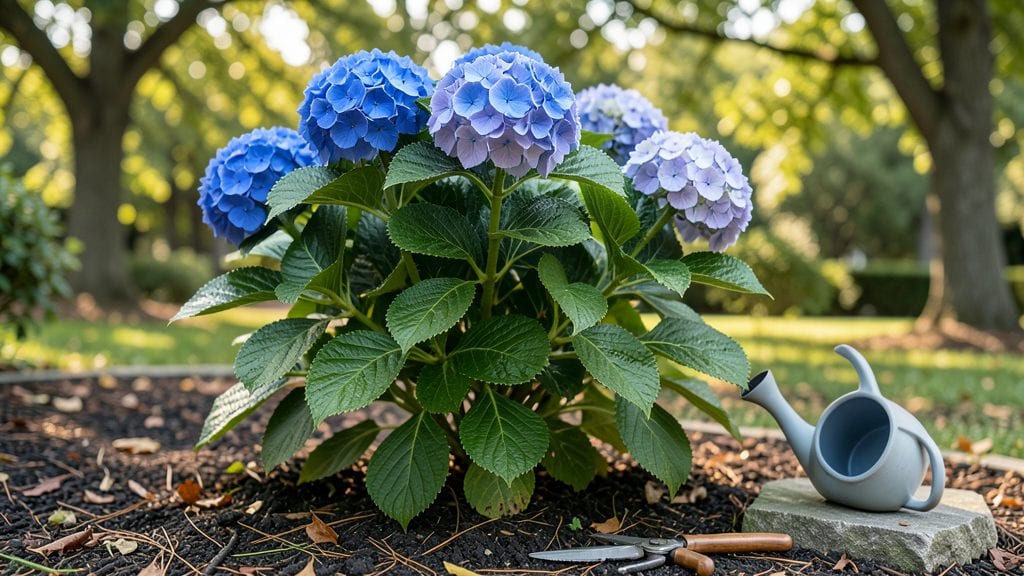
A hydrangea flower garden turns your yard into a living watercolor painting—bold blues, soft pinks, and snowy whites that shift with the soil. I’ve designed mine around a simple rule: group colors by mood, not just variety.
The mopheads in the front border bloom first, creating a spring explosion of color, while lacecaps in the back add delicate texture all summer long.
Here’s the secret: three varieties (one for height, one for midground, one for ground cover) keep maintenance simple. Panicle hydrangeas add vertical interest on trellises, while dwarf varieties spill over container edges.
The best part? You prune them all the same way—just snip back last year’s stems in late winter, and they reward you with season-long blooms without the fuss.
By autumn, your garden will glow with hydrangeas that change color based on soil pH—blue in acidic beds, pink in alkaline. Add companion plants like asters or Russian sage for contrast, and you’ve got a showstopper that thrives with minimal effort.
The key is starting small: one section, one color theme, and watching it grow into something stunning.
Works for borders, hedges, or even a single statement container. Let’s make your yard the neighborhood’s envy—without the upkeep of a high-maintenance garden.
📚 In This Guide
- What you need
- Instructions
- Tips and common mistakes
- Wrapping up and next steps
What you need
- ● Hydrangea plants: 3–5 mature bushes (choose varieties like Endless Summer, Nikko Blue, or Limelight for color diversity).
- ● Well-draining potting soil: 5–10 bags (or a mix of garden soil + compost for in-ground planting).
- ● Organic mulch: 2–3 cubic feet (pine bark or shredded leaves to retain moisture).
- ● Slow-release fertilizer: 1–2 bags (10-10-10 or hydrangea-specific formula).
- ● Aluminum sulfate or lime: Small bags (to adjust soil pH for blue/pink blooms).
- ● Garden gloves: 1 pair (to protect hands from thorns and soil).
- ● Hand trowel: 1 (for transplanting and soil prep).
- ● Pruning shears: 1 pair (bypass pruners for clean cuts).
- ● Watering can or hose with nozzle: 1 (for gentle hydration).
- ● Measuring tape or ruler: 1 (to space plants 3–6 feet apart).
- ○ Garden stakes or trellis (optional): For climbing varieties like Hydrangea petiolaris.
- ● Sunlight: Partial shade (4–6 hours of morning sun) or dappled light.
- ● Water source: Easy access to a hose or watering system.
- ○ Soil test kit (optional): To check pH (ideal: 5.2–5.5 for blue, 6.0+ for pink).
Step-by-Step instructions for planting a hydrangea flower garden
Here’s how to create a thriving hydrangea display that blooms reliably with minimal upkeep.
Choose the Right Location for Sun and Soil
Hydrangeas thrive in partial shade, with 4-6 hours of morning sun and afternoon shade in hotter climates. If your garden gets intense afternoon sun, opt for varieties like 'Endless Summer' or 'Nikko Blue'—they tolerate more light. Avoid full shade, which weakens blooms and leads to sparse flowering.
Test your soil’s moisture retention by digging a 6-inch hole and filling it with water. If it drains completely within an hour, your soil is too sandy, and you’ll need to amend it with 2-3 inches of organic compost mixed into the top 12 inches of soil. Hydrangeas hate soggy roots but also struggle in dry, compacted earth.
Plant Hydrangeas at the Correct Depth and Spacing
Dig a hole twice as wide as the root ball but only as deep—hydrangeas prefer to sit slightly higher than they did in the nursery pot. Gently loosen the roots if they’re circling the container, then place the plant in the hole so the top of the root ball sits 1 inch below soil level. This prevents rot while encouraging strong root growth.
Space plants 4-6 feet apart for large varieties like 'Annabelle' or 'Limelight', and 3-4 feet apart for smaller types like 'Little Lime' or 'Dolce'. Crowding leads to competition for nutrients, resulting in smaller blooms. Backfill the hole with native soil mixed with 1 cup of slow-release fertilizer per plant to give them a nutrient boost without overfeeding.
Water Deeply and Mulch for Moisture Retention
Water each newly planted hydrangea deeply—soak the soil until it’s 6 inches down, then let it drain. Hydrangeas need 1-1.5 inches of water per week, but they’re drought-tolerant once established. Overwatering is worse than underwatering, so check soil moisture by sticking your finger 2 inches deep; if it’s dry, water again.
Apply a 3-inch layer of mulch around the base, keeping it 3 inches away from the stem to prevent rot. Use shredded bark or pine straw—avoid dyed mulches, which can alter soil pH. Mulch locks in moisture, regulates soil temperature, and suppresses weeds, cutting maintenance time by half.
Prune Strategically for Season-Long Blooms
Prune old wood hydrangeas (like 'Annabelle' or 'Grandiflora') in late winter or early spring, cutting back 1/3 of the oldest stems to the ground. New growth emerges from the base, ensuring vibrant summer blooms. For reblooming varieties ('Endless Summer', 'Panicle'), prune in late winter to shape the plant, then trim spent flowers in early fall to encourage next year’s blooms.
Never prune in fall—new growth won’t harden off before winter, and you’ll lose next year’s flowers. If you see dead or crossing branches, remove them anytime, but avoid heavy pruning after mid-July, as it cuts off potential blooms for the current season.
Adjust Soil pH for Color Changes
Hydrangeas are famous for their color-shifting blooms, but the secret lies in soil pH. For blue flowers, aim for pH 5.2-5.5—add aluminum sulfate or peat moss to acidic soil. For pink flowers, maintain pH 6.0-7.0 by amending with lime. Test soil pH annually with a soil test kit, and adjust in early spring before new growth begins.
If your hydrangeas bloom green or revert to white, your pH is off—either too high (lime-heavy) or too low (peat-heavy). A gradual shift takes 2-3 months, so start adjustments 6 weeks before peak bloom season for the best results.
Tips & tricks for perfect hydrangea flower gardens
Creating a stunning hydrangea garden that thrives with minimal effort requires understanding these key strategies that go beyond basic planting instructions.
Soil Preparation Insight: In Step 1, when testing your soil's moisture retention, pay special attention to the drainage test. If water drains completely within an hour, your soil is too sandy, and you'll need to incorporate the recommended 2-3 inches of organic compost into the top 12 inches of soil. This isn't just about adding organic matter—it's about creating a sponge-like texture that holds moisture without becoming waterlogged, which is crucial for hydrangeas. I've seen gardens where the soil looked properly amended at planting, only to fail because the compost wasn't mixed deeply enough.
Planting Depth Precision: The 1-inch below soil level placement in Step 2 is more critical than most gardeners realize. This positioning prevents stem rot while encouraging robust root development. When planting multiple hydrangeas, use a level or string line to ensure consistent depth across all plants—even a ½-inch variation can affect establishment. I've noticed that plants set exactly at this depth often show stronger first-year blooming than those planted too deep or too shallow.
Watering Strategy: The 1-1.5 inches of water per week recommendation in Step 3 is a guideline, but the real secret lies in how you deliver that water. Deep watering means soaking until moisture reaches 6 inches down, which typically requires about 1 gallon per plant per watering session. Early morning watering (before 10 AM) minimizes evaporation and fungal risks. I've found that establishing this routine in the first month after planting creates plants that are far more drought-tolerant in subsequent seasons.
Pruning Timing Nuance: While Step 4 clearly outlines pruning windows, the most common mistake I see is pruning at the wrong time for reblooming varieties. For 'Endless Summer' types, that early fall trim of spent flowers should happen in late September—early enough to allow new growth to harden off before winter, but not so late that it interferes with current season blooms. Mark your calendar now for this precise timing.
Pro Tips for Hydrangea Flower Garden
- Creating a stunning hydrangea garden that thrives with minimal effort requires understanding these key strategies that go beyond basic planting instructions.
- Soil Preparation Insight: In Step 1, when testing your soil's moisture retention, pay special attention to the drainage test.
- Planting Depth Precision: The 1-inch below soil level placement in Step 2 is more critical than most gardeners realize.
Frequently asked questions
Got questions about creating your dream hydrangea flower garden?
Here are answers to the most common ones—so you can get blooms without the guesswork!
When is the best time to plant hydrangeas?
The ideal time to plant hydrangeas is in early spring or fall when soil temperatures are cool (60–70°F). This gives roots time to establish before extreme heat or cold. Avoid planting in summer—heat stress can stunt growth. If you’re in a mild climate, late winter (just before new growth starts) also works!
Do all hydrangeas need pruning? If so, when?
Not all hydrangeas need pruning! Bigleaf (mophead/lacecap) and oakleaf types bloom on old wood, so prune right after flowering (late summer/fall). Panicle and smooth hydrangeas bloom on new wood, so prune in late winter or early spring before buds swell. Always use clean, sharp shears to avoid disease.
How often should I water my hydrangeas?
Hydrangeas love consistent moisture—aim for 1–1.5 inches of water per week, either from rain or irrigation. Mulch around the base (2–3 inches) to retain moisture and regulate soil temp. During droughts, water deeply 2–3 times per week. Yellowing leaves? Often a sign of underwatering (or overwatering—ensure good drainage!).
Can I change my hydrangea flower colors?
Yes! Bigleaf hydrangeas are famous for their color-changing magic. Blue/purple flowers thrive in acidic soil (pH 5.5–6.0), while pink/red blooms prefer neutral to alkaline soil (pH 6.0–7.0). Test your soil with a kit, then amend with aluminum sulfate (for blue) or lime (for pink). Results take 2–3 months!
What pests or diseases should I watch for?
Common issues include:
- Slugs/snails: Use beer traps or diatomaceous earth.
- Spider mites: Spray leaves with water or neem oil.
- Powdery mildew: Improve airflow and avoid overhead watering.
- Leaf spot: Remove infected leaves and apply fungicide.
Wrapping up and next steps
Creating a hydrangea flower garden that bursts with color all season doesn’t have to be complicated—especially with zero-fuss pruning! By choosing the right varieties, understanding their unique needs, and mastering simple maintenance, you’ll enjoy lush blooms from spring to frost.
Whether you’re a beginner or a seasoned gardener, these tips make it easy to cultivate a stunning, low-effort display.
Ready to dive in? Start small—pick one hydrangea type to test your space, soil, and skills, then expand as you gain confidence. Your future garden (and future self) will thank you! 🌸✨