
Tools
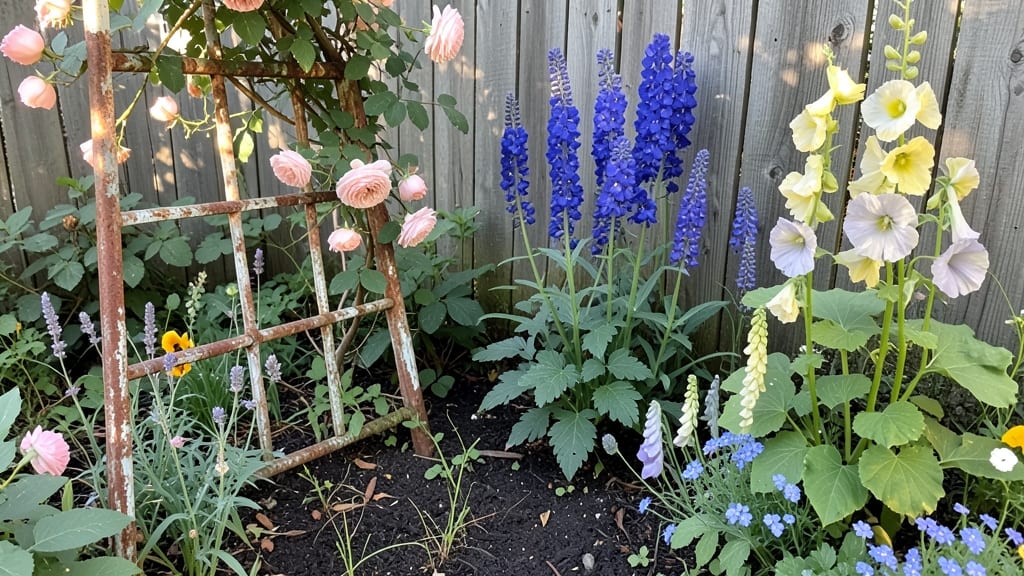
My cottage garden isn't just a garden—it's a living storybook where roses tumble over stone walls and lavender drifts like wild waves. ✨ The magic lies in layers: tall delphiniums behind roses, herbs tucked into crevices, and annuals spilling over edges like confetti.
This isn't about rigid rows—it's about curving paths, mismatched containers, and plants that whisper to each other.
You don't need a sprawling yard to start. My first cottage garden fit in a 10x12-foot corner, using repurposed wood for trellises and vintage pots from a thrift store.
The key is three simple layers: tall backrow plants (like hollyhocks), mid-height bloomers (roses, peonies), and trailing fillers (sweet alyssum, thyme). Color? Think "paintbox"—soft blues, creamy whites, and the occasional bold pop of red for contrast.
By summer's end, you'll have a garden that smells like a Sunday walk through the countryside, with blooms from May through frost. The roses perfume the air, the lavender repels pests naturally, and the herbs provide fresh snippets for tea or cooking.
Every season adds new characters: spring bulbs, summer perennials, and autumn's fiery sedum.
Works in cities, suburbs, or country lanes—just adjust the scale. Add a rustic bench, a birdbath, or wind chimes to complete the scene. Here's how to weave it all together without breaking the bank or your back.
📚 In This Guide
- What you need
- Instructions
- Tips and common mistakes
- Wrapping up and next steps
What you need
- ● Soil: 10–20 bags of high-quality topsoil or garden compost (50–100 lbs each, depending on garden size). For clay-heavy soil, mix in peat moss or perlite for drainage.
- ● Mulch: 5–10 bags of shredded bark, straw, or pine needles (2–3 cubic feet per bag) to retain moisture and suppress weeds.
- ● Plants: Perennials (3–5 varieties): Lavender, foxgloves, delphiniums, or peonies (3–5 plants per type).
- ● Annuals (2–3 varieties): Sweet peas, marigolds, or nasturtiums (5–10 plants per type for color bursts).
- ● Shrubs/Climbers: Roses (dwarf varieties), clematis, or wisteria (1–2 plants).
- ● Herbs: Rosemary, thyme, or mint (3–5 plants for practicality and fragrance).
- ● Decor: Vintage garden ornaments (1–3 pieces, like birdhouses or wind chimes).
- ● Terracotta pots (3–5, varying sizes for herbs/flowers).
- ○ Stone or brick pathways (optional; 10–20 flat stones or pavers).
- ● Hand Tools: Trowel (1, stainless steel).
- ● Pruners (1 pair, bypass-style for clean cuts).
- ● Garden fork (1, for turning soil).
- ● Gloves (1–2 pairs, waterproof and breathable).
- ○ Power Tools (Optional but Helpful): Hedge trimmer (1, for shaping shrubs).
- ● Wheelbarrow (1, for hauling soil/mulch).
- ● String trimmer or edger (1, for clean borders).
- ● Location: Choose a spot with 6+ hours of sunlight daily (partial shade works for some perennials like hostas).
- ● Water Access: Ensure a hose or watering can is nearby (or plan for drip irrigation for low-maintenance charm).
- ● Layout Plan: Sketch a rough design with layers (tall plants at the back, medium in the middle, and low-growing/creeping plants in front).
- ● Seasonal Prep: Start cool-season plants (like pansies) in early spring or fall.
- ● Save heat-lovers (like zinnias) for late spring/summer.
Instructions for designing your whimsical cottage garden
Let’s create a layered, ever-blooming garden that feels like a storybook come to life.
🌿 Step 1: Plan Your Garden Layers
Start by sketching your space and dividing it into three key layers: the backdrop (tall plants like delphiniums or hollyhocks), the mid-height (shrubs, perennials, and roses), and the foreground (low-growing flowers, herbs, and ground covers). I like to place my tallest plants along fences or walls to create natural height without blocking sunlight for shorter varieties.
Use the 4-foot rule—tall plants should be at least 4 feet back from the garden’s edge to avoid overshadowing smaller blooms. This keeps everything visible and balanced. Jot down where each plant will go, leaving 12-18 inches between mid-height plants and 6-12 inches between foreground flowers for easy maintenance.
🪴 Step 2: Prepare the Soil for Rich, Diverse Growth
Dig in 2-3 inches of compost across the entire area to improve drainage and fertility. Cottage gardens thrive on loose, well-draining soil, so avoid compacting it during prep. If your soil is heavy clay, mix in 1 part sand or perlite to every 3 parts soil—this helps roots breathe and prevents waterlogging.
Test your soil’s pH if possible; most cottage garden favorites (like roses, peonies, and lavender) prefer a slightly acidic to neutral range (6.0-7.0). If your soil is too alkaline, add sulfur or peat moss to adjust it gradually. Spread a 1-inch layer of mulch (like shredded bark or straw) after planting to retain moisture and suppress weeds.
☀️ Step 3: Plant for Season-Long Color and Texture
Choose plants that bloom at different times to ensure continuous color. For spring, include tulips, daffodils, and bleeding hearts; for summer, add roses, coneflowers, and black-eyed Susans; and for fall, mix in asters, chrysanthemums, and sedum. I always tuck in evergreen shrubs (like boxwood or heather) for winter structure and interest.
Group plants with similar water needs together—drought-tolerant varieties (like lavender or Russian sage) near the edges, and moisture-loving plants (like hostas or astilbes) closer to irrigation sources. Leave gaps of 6-12 inches between clumps to allow air circulation, which reduces disease and encourages robust growth.
✂️ Step 4: Add Whimsical Touches for Character
Incorporate ornamental grasses, climbing roses, or trellises to add movement and vertical interest. I love weaving in vines like clematis or honeysuckle to create natural arches or draping accents. Scatter unexpected elements—old garden tools, birdbaths, or a rustic bench—to enhance the cottage charm.
Use mixed heights and textures—pair feathery grasses with bold foliage plants like hostas or ferns—to create depth. Avoid symmetry; let the garden feel organic and layered, as if it’s been growing for decades. Add scented plants (like roses, jasmine, or lavender) near seating areas for a sensory delight.
💧 Step 5: Establish a Watering and Maintenance Routine
Water deeply once or twice a week, depending on rainfall, focusing on the root zones of plants. Early morning is best to reduce evaporation and fungal risks. Use a soaker hose or drip irrigation to deliver moisture slowly and evenly—this prevents runoff and keeps foliage dry.
Mulch annually in early spring to refresh the soil and suppress weeds. Prune dead or overgrown branches in late winter or early spring before new growth begins. Fertilize lightly in early spring and midsummer with a balanced, slow-release fertilizer to encourage steady blooming without excessive leafy growth.
Tips & tricks for perfect cottage garden design
Creating a whimsical cottage garden takes more than just planting flowers—it's about layering, texture, and intentional design choices that make your garden feel alive all season long.
Layering Like a Pro: In Step 1, when planning your garden layers, think vertically as well as horizontally. Add trellises or obelisks for climbing roses or clematis to create that magical "storybook" feel. I like to place my tallest plants (like delphiniums) against fences or walls, but if you don't have those, use sturdy stakes or even a simple wooden frame to elevate vines. This creates instant height and draws the eye upward, making your garden feel more dimensional. The 4-foot rule for backdrop plants is your friend—it prevents those towering blooms from blocking sunlight for your smaller plants below.
Soil Secrets for Thriving Plants: Don't skip the soil prep in Step 2! That 2-3 inches of compost isn't just about nutrients—it's about creating the perfect environment for roots to breathe. I've learned the hard way that compacted soil leads to poor drainage, which can drown plant roots. For clay-heavy soil, mixing in sand or perlite (1:3 ratio) makes all the difference. And here's a pro tip: if you're unsure about your soil's pH, most garden centers sell simple test kits. Aiming for that 6.0-7.0 range gives your roses, peonies, and lavender the ideal conditions to really shine.
Seasonal Color Planning: When selecting plants in Step 3, think about your garden's "bloom calendar." I like to create a simple chart with seasons across the top and plant types down the side. This helps me visualize how each plant contributes to the year-round display. For example, while tulips and daffodils announce spring, sedum and asters take over in fall, with evergreens like boxwood providing winter structure. The key is to leave those 6-12 inch gaps between plants—it might seem like wasted space, but it actually improves air circulation and makes maintenance easier.
Whimsy Without Chaos: The magic of cottage gardens lies in their organic feel, but that doesn't mean you should let things get out of control. In Step 4, when adding those whimsical touches, I recommend starting with one or two focal points rather than going overboard. A single rustic bench or an old birdbath can anchor your design without overwhelming it. And remember, the goal is mixed heights and textures—not symmetry. Let plants spill naturally over edges, and don't be afraid to leave some "happy accidents" in your design. It's these imperfect touches that make cottage gardens feel so inviting.
Pro Tips for My Cottage Garden
- Creating a whimsical cottage garden takes more than just planting flowers—it's about layering, texture, and intentional design choices that make your garden feel alive all season long.
- Layering Like a Pro: In Step 1, when planning your garden layers, think vertically as well as horizontally.
- Soil Secrets for Thriving Plants: Don't skip the soil prep in Step 2!
Frequently asked questions
What’s the best time of year to start planting a cottage garden?
A cottage garden thrives on layered planting, so start in early spring (after the last frost) for perennials and hardy annuals. For a year-round bloom, add fall-planted bulbs (like daffodils or tulips) and winter pansies. If your climate is mild, you can even tuck in cool-season crops (like snapdragons) in late summer for autumn color.
How much does a cottage garden cost to set up?
Costs vary widely! A budget-friendly garden (using heirloom seeds, recycled containers, and volunteer plants) can start at $50–$100. Mid-range setups (with purchased perennials, trellises, and soil amendments) run $200–$500. For a luxury cottage garden (rare roses, topiaries, and custom pathways), budget $1,000+. Pro tip: Swap cuttings with neighbors or forage for free plants!
Will pests ruin my cottage garden before it even blooms?
Not necessarily! Cottage gardens are naturally pest-resistant thanks to their diversity—mixed plantings confuse bugs, and fragrant herbs (like lavender or rosemary) deter many pests. Still, keep an eye out for aphids or slugs. Use homemade sprays (soapy water or garlic tea) or introduce beneficial insects (like ladybugs) for a chemical-free fix.
Can I create a cottage garden in a small space, like a balcony or patio?
Absolutely!
Cottage gardens thrive in containers, window boxes, or vertical gardens. Choose compact perennials (like miniature roses or thyme) and trailing annuals (petunias, nasturtiums). Use hanging baskets for height and raised beds for root crops. Even a single large pot can hold a mini “wild” corner with ferns, heuchera, and sweet alyssum!
How much maintenance does a cottage garden really need?
More low-effort charm than high-maintenance drama! Plan for:
- Weekly: Deadheading spent blooms ( extends flowering), weeding (10–15 mins), and watering (deep soaks in the morning).
- Seasonal: Pruning perennials in late winter, dividing overcrowded plants in spring/fall, and adding mulch to suppress weeds.
- Annual: Renewing bulbs and replacing short-lived annuals (like sweet peas).
Wrapping up and next steps
Creating your whimsical cottage garden is a labor of love that brings charm, color, and life to your outdoor space—one layer at a time! 🌸 From selecting the right plants to layering textures and colors, this design is all about joyful imperfection and seasonal beauty.
Whether you’re a seasoned gardener or just starting, the key is to embrace the process and let your creativity bloom.
Ready to transform your space? Grab your tools, sketch a rough plan, and start small. Plant a few favorites, observe what thrives, and let your garden evolve naturally. Soon, you’ll have a magical cottage retreat that delights the senses all year round!