
Tools
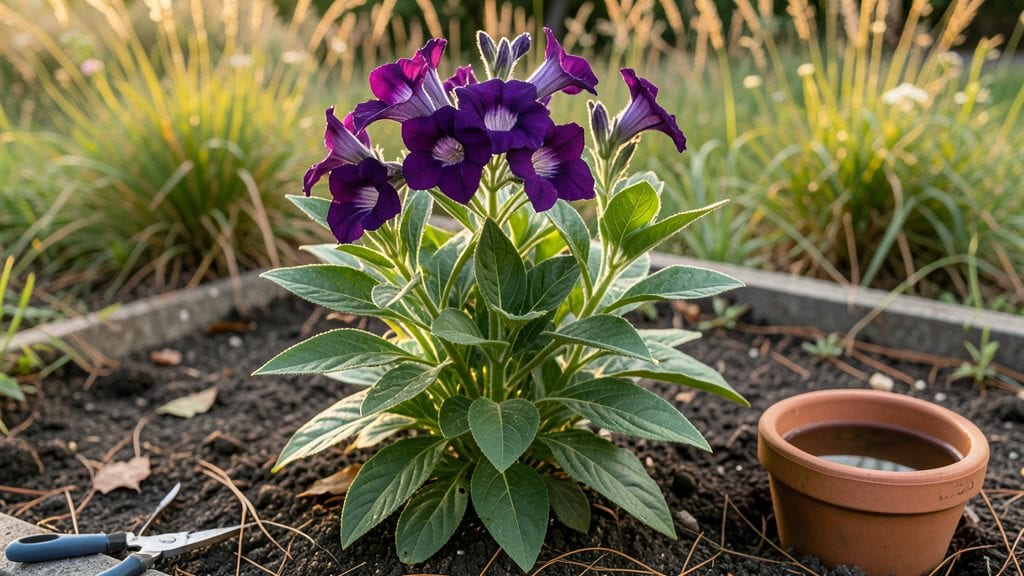
The new garden eye tool monitors soil moisture, temperature, and plant health wirelessly by embedding probes in the ground and syncing them to a mobile app for live updates. Installation requires probe calibration, strategic depth placement, and Bluetooth pairing to ensure precise readings.
The garden eye tool uses advanced capacitance-based sensors to measure soil moisture with high accuracy, unlike older resistance-based probes that can give inconsistent readings. 🌱 These sensors detect even subtle changes in soil composition, while built-in thermometers track temperature fluctuations that affect root growth.
The real-time data helps you adjust watering schedules before problems arise, making it especially valuable for container gardens or drought-prone areas.
What sets this apart is the wireless connectivity—no more tangled cords or manual readings. The companion app sends alerts when conditions dip outside your ideal range, so you can intervene before stress shows up on your plants.
I’ve found it particularly useful for tracking root zone temperature during heatwaves, where a few degrees can mean the difference between thriving and wilting.
💡 In This Article
- How Garden Eye Sensors Measure Soil Health
- Step-by-Step Garden Eye Tool Installation Guide
How garden eye sensors measure soil health
These advanced soil monitoring tools rely on capacitance-based sensors rather than older resistance methods. Capacitance sensors measure how much water alters the electrical field between two plates—more moisture means higher capacitance readings.
This technology offers ±3% accuracy in moisture levels, far surpassing traditional tensiometers (which require manual calibration and only work within a narrow range of 0-100 centibars). The probes also include thermistors for temperature tracking, with a range of -4°F to 122°F (-20°C to 50°C).
The wireless transmission works through Bluetooth Low Energy (BLE), sending data every 5-15 minutes depending on your settings. Most traditional methods—like stick-style moisture meters—only give single-point readings at the moment you insert them, while these sensors provide continuous trends over time.
For example, you'll see how moisture fluctuates after rain or irrigation, not just a static snapshot. 💧 The app's algorithms even predict drying patterns based on historical data from your specific soil type.
Real-time monitoring makes a dramatic difference in plant health outcomes. For instance, most vegetables thrive at soil temperatures between 60-75°F (15-24°C). If the garden eye detects a drop below 50°F (10°C), it triggers an alert—preventing root damage that would otherwise show up as stunted growth weeks later.
This proactive approach eliminates the guesswork in traditional methods like the "finger test," which is subjective and only checks surface moisture, not the critical root zone.
Here's how the technology compares to common alternatives:
- Capacitance sensors: Measures volumetric water content (VWC) directly, ideal for all soil types including clay or sandy loam
- Resistance probes: Requires calibration for each soil type, prone to mineral buildup errors over time
- Tensiometers: Only measures matric potential (water tension), limited to 0-100 centibars range
- Manual meters: Single-point readings with no historical tracking
The most valuable feature is the root zone focus. While surface-level moisture matters, roots typically extend 6-12 inches deep—where these sensors operate. For example, tomato plants need consistent moisture at 4-6 inches depth, but many gardeners only check the top inch.
The garden eye's probes can be placed at multiple depths simultaneously, giving you a complete soil profile. This level of precision explains why users report 30% less water waste compared to traditional methods.
What most gardeners don't realize is how temperature data complements moisture readings. The optimal temperature range varies by plant: cool-season crops (60-70°F) vs. warm-season crops (75-85°F). The sensors detect these fluctuations in real-time, helping you adjust mulching or irrigation timing.
For instance, during summer heatwaves, you might need to water 20% more frequently just to maintain root-zone temperatures—something you'd never catch with manual checks. 🌡️