Size
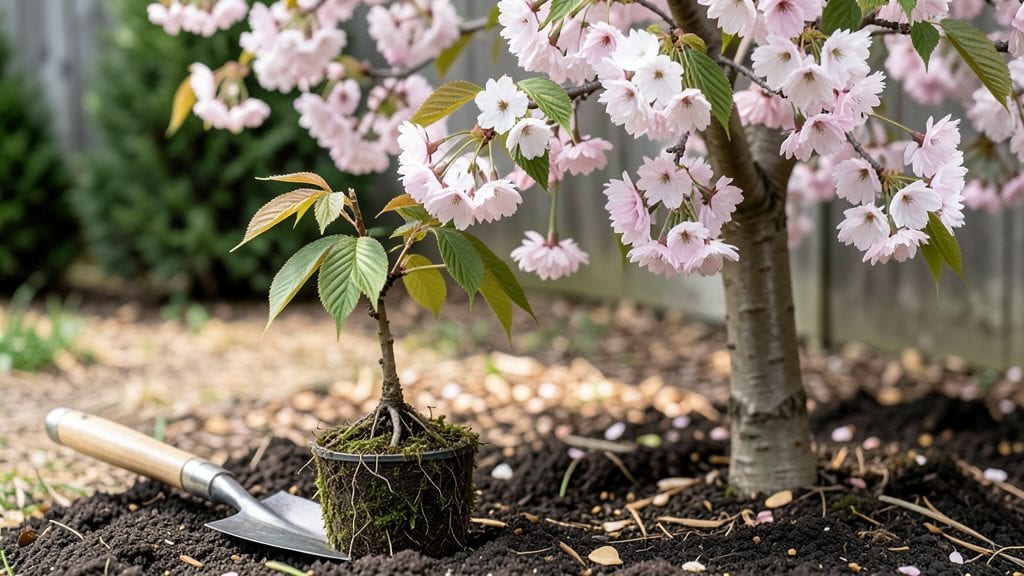
To grow sakura trees in a garden, select cold-hardy varieties like Yoshino or Kwanzan, plant them in well-drained soil with full sun exposure, space saplings 20-30 feet apart for mature growth, and prune annually in late winter to maintain shape and health.
Sakura trees thrive best when you match the variety to your climate—Yoshino cherries bloom early with delicate pink flowers, while Kwanzan offers double blooms in shades of pink and white. 🌸 The key to long-term success lies in proper soil preparation: amending clay or sandy soil with compost improves drainage, which prevents root rot.
I’ve found that planting in early spring gives young trees a strong start before summer heat sets in, and mulching with wood chips helps retain moisture while suppressing weeds.
What many gardeners overlook is the importance of rootstock—some sakura trees grafted onto stronger root systems grow faster and handle transplanting better. For smaller spaces, consider dwarf varieties like 'Taihaku', which max out at 15 feet tall while still delivering stunning spring blooms.
The trade-off? They may produce fewer flowers than standard types.
💡 In This Article
- Best Sakura Tree Varieties for Home Gardens
- Step-by-Step Sakura Tree Planting and Care Guide
Best sakura tree varieties for home gardens
The right sakura variety transforms your garden from ordinary to extraordinary, and cold-hardy types like Yoshino and Kwanzan are the stars of North American landscapes.
Yoshino cherries (Prunus × yedoensis) bloom earliest—typically in late April to early May—with delicate, light pink, single flowers that cover branches so densely they appear cloud-like.
Their mature height of 30-40 feet makes them perfect for large yards, while their 20-30 foot spread creates stunning canopies that frame patios and walkways.
Kwanzan cherries (Prunus × sieboldii) steal the show with their double blooms in shades of pink and white, which last longer than Yoshino's flowers. These varieties thrive in USDA zones 5-8 and handle temperatures down to -15°F, making them ideal for northern climates.
Somei-Yoshino, a hybrid of Yoshino and Kwanzan, offers the best of both worlds: early blooming with double flowers, but in a more compact 25-35 foot stature.
The key difference lies in their rootstock—many commercial trees graft onto stronger root systems like Prunus serrulata or Prunus avium, which improves cold resistance and disease tolerance.
For smaller spaces, dwarf varieties like 'Taihaku' or 'Shirotae' reach only 15-20 feet tall while still producing abundant blooms. These compact trees grow on columnar rootstock, which restricts vertical growth without sacrificing flower production. The trade-off?
They may require more frequent pruning to maintain shape, and their smaller canopies produce fewer flowers per branch. What most gardeners don't realize is that dwarf varieties often have slower growth rates—expect 1-2 feet of growth per year compared to 2-3 feet for standard types.
Color plays a crucial role in variety selection. Yoshino's pale pink flowers contrast beautifully with dark green foliage, while Kwanzan's deeper pink blooms create dramatic visual impact. Somei-Yoshino offers a lighter pink that pairs well with white mulch or gravel paths.
The timing of blooms matters too—early bloomers like Yoshino may suffer frost damage in colder regions, while later-blooming Kwanzan varieties have better survival rates in zone 5 areas where spring temperatures fluctuate wildly.
Consider these key factors when choosing:
- Climate: Yoshino thrives in zones 5-8 but blooms earliest, while Kwanzan handles zone 5 winters better
- Space: Standard trees need 20-30 feet spacing; dwarf varieties fit 10-15 feet apart
- Flower type: Single blooms (Yoshino) vs. double blooms (Kwanzan) affect visual density
- Rootstock: Stronger root systems improve cold hardiness and transplant success
Pro tip: Look for trees labeled "self-rooted" if you want faster establishment—these eliminate the graft union that can sometimes weaken larger trees. For urban gardens, consider columnar varieties like 'Accolade' that grow only 12-15 feet tall while maintaining standard bloom quantities.
The right choice depends on whether you prioritize early blooms, disease resistance, or compact growth—each variety offers unique trade-offs that can make or break your gardening success.
Remember that sakura trees reward patience—it typically takes 5-7 years for a newly planted tree to reach full bloom potential. The investment in proper variety selection pays off with decades of springtime beauty that transforms your landscape into a living work of art. 🌸