Companion Plants
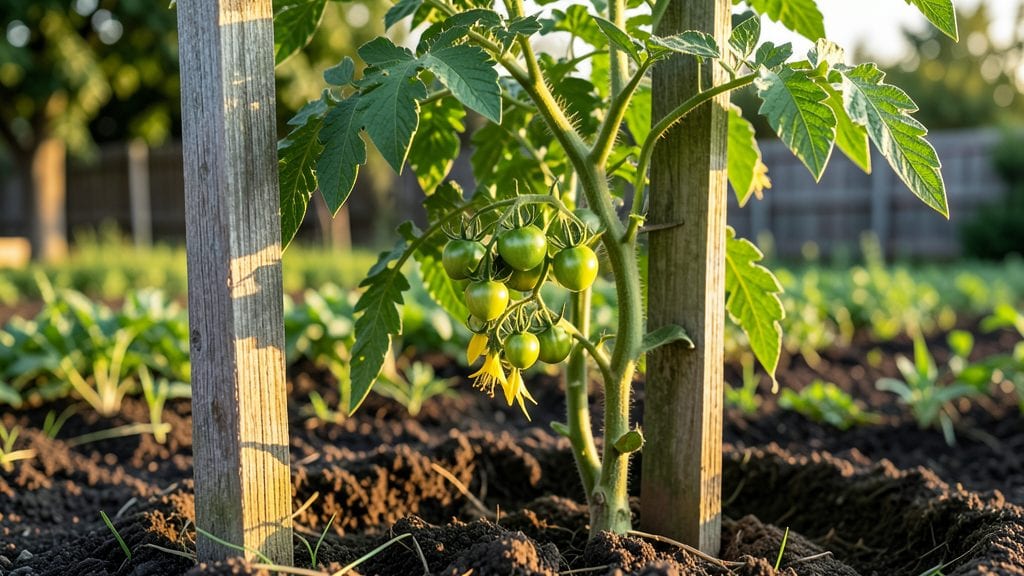
Square foot gardening tomato plants lets you grow a full harvest in just 1 square foot—no backyard required. I turned my balcony into a tomato powerhouse using this method, and the key is treating tomatoes like they’re the VIPs of your tiny plot.
Most people assume you need acres for juicy, vine-ripened tomatoes, but the right spacing and support system proves that wrong every summer.
The secret starts with one plant per square foot, staked or caged to keep the fruit off the ground where diseases lurk. You’ll need lightweight, nutrient-rich soil (think one-third compost) and a watering routine that keeps roots consistently moist but never soggy.
I swear by drip irrigation to avoid wilted leaves from uneven watering—something that ruined my first square-foot harvest.
By midsummer, your plants will be heavy with fruit, and you’ll understand why this method works: more air circulation means fewer fungal issues, and the compact layout makes weeding and harvesting a breeze.
The best part? You’ll save space for basil, peppers, or lettuce in the same bed—no more choosing between your favorite veggies.
This technique works in containers, raised beds, or even window boxes as long as you follow the 1-plant-per-square-foot rule. Whether you’re in an apartment or a small urban lot, you’ll get tomatoes that rival your neighbor’s backyard garden—without the backbreaking work. Let’s get those plants thriving!
📚 In This Guide
- What you need
- Instructions
- Tips and common mistakes
- Wrapping up and next steps
What you need
- ● Square Foot Garden Box: 4’ x 4’ wooden frame (or modular sections) with 1" x 1" grid for planting zones. Height: 6-12" (deeper for larger varieties).
- ● Soil Mix: 1 part compost, 1 part peat moss or coconut coir, 1 part vermiculite (sterile, organic blend). Total: ~27 cubic feet per 4’ x 4’ box.
- ● Tomato Plants: Determinate varieties (bush): 1 plant per square foot (e.g., 'Patio', 'Tiny Tim'). Max 16 plants per box.
- ● Indeterminate varieties (vining): 1 plant per square foot (e.g., 'Cherry Roma', 'Sungold'). Use cages or stakes!
- ● Support Structures: Cages: 5’ tall tomato cages (1 per plant) or
- ● Stakes: 6’ bamboo or metal stakes (1 per plant) + soft ties.
- ● Watering Supplies: Drip irrigation kit or watering can with narrow spout (to avoid disturbing soil).
- ● Mulch (straw or shredded leaves) to retain moisture.
- ● Fertilizer: Balanced organic fertilizer (e.g., 5-5-5) or compost tea for feeding.
- ● Companion Plants: Basil, marigolds, or onions (plant in 1 square foot per box to deter pests).
- ● Row Covers: Lightweight fabric to protect seedlings from early frost.
- ● pH Test Kit: Ensure soil pH is 6.0–6.8 (tomatoes love slightly acidic soil!).
- ● Pruning Shears: For trimming suckers (indeterminate varieties).
- ● Garden Gloves: Because tomato leaves are spiky!
Step-by-Step instructions for square foot gardening tomato plants
This method transforms limited space into a high-yield tomato paradise with precision and efficiency.
Prepare Your Square Foot Grid
First, divide your garden bed into a 1-foot by 1-foot grid using a string and stakes or pre-made square foot frames. For 4 tomato plants, you'll need 4 squares total. The key here is spacing—tomatoes need room to sprawl, but this method forces vertical growth by training vines upward.
Clear the selected area of weeds and debris, then loosen the soil to a depth of 6-8 inches. Mix in 2-3 inches of compost into the top layer to enrich the soil without overcrowding roots. This step ensures your tomatoes have the nutrients they need while preventing root competition.
Plant Tomato Starts at the Correct Depth
Place one tomato plant per square, positioning it so the stem is buried up to its first set of leaves. This encourages stronger root growth along the buried stem. Gently press the soil around the base to secure the plant without compacting it too tightly.
For 4 plants, you’ll need 4 healthy 4-6 week-old seedlings with at least 3-4 true leaves. If using larger varieties, place them in the center of the square to maximize vertical space. Avoid planting too deeply—this can suffocate the stem and delay growth.
Install Support Structures Immediately
Drive a 6-foot tall tomato cage or stake into each square at planting time. This prevents root disturbance later. For indeterminate varieties, use 2-3 stakes per plant tied with soft twine to guide vines upward. The goal is to keep foliage off the ground, reducing disease risk.
If using cages, place them 2-3 inches away from the stem to avoid restricting growth. For stakes, position them 1-2 inches from the plant and tie the main stem loosely to the stake every 6-8 inches as it grows. This ensures the plant stays upright without strangling it.
Water and Mulch for Consistent Moisture
Water each plant deeply immediately after planting to settle the soil and encourage root contact. Use 1 gallon of water per square to ensure the root zone is fully hydrated. After watering, apply a 2-inch layer of mulch around each plant, keeping it 2-3 inches away from the stem to prevent rot.
Mulch retains moisture, suppresses weeds, and regulates soil temperature—critical for tomatoes. Replenish mulch as it breaks down, but avoid piling it against the stem. Water every 2-3 days in hot weather, aiming for 1-1.5 gallons per plant when the top 1-2 inches of soil feel dry.
Step 5: Prune and Train for Maximum Yield
As plants grow, prune suckers (the small shoots that form in the joint between the stem and a branch) to direct energy into fruit production. Remove them by pinching them off with your fingers when they’re no larger than a pencil. This keeps the plant focused on producing tomatoes rather than excessive foliage.
For indeterminate varieties, prune lower leaves that touch the ground to improve airflow and reduce disease. Harvest tomatoes when they’re fully colored and slightly soft to the touch, twisting gently to avoid damaging the vine. This encourages continuous production throughout the season.
Tips & tricks for square foot gardening tomato plants
Square foot gardening is all about precision, and tomatoes thrive when given the right conditions in compact spaces. These key strategies will help you optimize your yield while avoiding common pitfalls.
The Grid Layout Matters: When creating your 1-foot squares, use a sharp pencil or string to mark precise lines. I've found that slightly overlapping the grid lines by 1/4 inch creates cleaner edges and prevents soil spillage between squares. This might seem minor, but it makes watering and mulching far more efficient—especially when you're managing four plants in a small space.
Soil Depth and Compost Ratio: The 6-8 inch soil loosening in Step 1 is critical, but don't overlook the compost-to-soil ratio. For maximum nutrient density, I recommend mixing the 2-3 inches of compost thoroughly into the top 6 inches of soil rather than just placing it on top. This creates a nutrient-rich zone where roots can access what they need throughout the growing season. A soil probe can help verify you've achieved proper depth.
Support Structure Placement: Positioning your 6-foot tall cages or stakes immediately after planting (as mentioned in Step 3) prevents root disturbance, but there's more to it. For indeterminate varieties, I recommend installing two stakes on opposite sides of the square at planting time—this gives you flexibility to train vines in either direction as they grow. The 2-3 inch spacing from the stem is perfect, but use soft tree ties rather than wire to avoid damaging the stem as it thickens.
Watering Precision: The 1 gallon per square immediately after planting is non-negotiable, but here's what nobody tells you: water each square in the same corner to create consistent moisture patterns. Over time, you'll notice plants in the corners of your grid tend to dry out faster due to edge effects. Adjust your watering route to account for this—always finish at the corners last. And when checking soil moisture, use your finger to test the 1-2 inch depth mentioned in Step 4, but also feel 2-3 inches deeper to catch early signs of drought stress.
Pro Tips for Square Foot Gardening Tomato Plants
- Square foot gardening is all about precision, and tomatoes thrive when given the right conditions in compact spaces. ...
- The Grid Layout Matters: When creating your 1-foot squares, use a sharp pencil or string to mark precise lines. I've ...
- Soil Depth and Compost Ratio: The 6-8 inch soil loosening in Step 1 is critical, but don't overlook the compost-to-so...
Frequently asked questions
about square foot gardening with tomato plants—because even the smallest garden deserves big results!How many tomato plants can I fit in a 1-square-foot square?
A single large tomato plant (like a beefsteak or heirloom) thrives in a 1-square-foot space, but you can fit 4-9 smaller varieties (like cherry or Roma) depending on their growth habit. Use cage-free training (like stakes or trellises) to maximize vertical space and airflow.
When is the best time to plant tomatoes in square foot gardens?
Plant after the last frost when soil is at least 60°F (15°C). For warm climates, start in early spring; cooler zones may need to wait until late April or May. Use black plastic mulch to warm soil faster if needed!
Can I grow tomatoes in square foot gardens without cages or stakes?
Yes! Use floral wire or bamboo stakes for indeterminate varieties, or let determinate tomatoes bush out naturally. For space-saving hacks, try espalier training against a wall or trellis. Just ensure plants get 6-8 hours of sun daily.
Why are my square foot garden tomatoes cracking or turning yellow?
Cracking? Inconsistent watering (too much/too little) causes it—keep soil evenly moist. Yellow leaves? Check for underwatering, nutrient deficiency (like nitrogen), or pests (aphids, hornworms). Prune lower leaves for airflow and fertilize with balanced tomato food every 3-4 weeks.
What’s the best companion plant for tomatoes in square foot gardens?
Pair tomatoes with basil, marigolds, or onions to repel pests and improve flavor. Avoid brassicas (cabbage, broccoli) or corn—they compete for nutrients. Use interplanting (e.g., basil between tomato plants) to save space and boost yields!
Wrapping up and next steps
Square foot gardening proves that growing tomato plants in small spaces isn’t just possible—it’s rewarding! 🌱 With the right companion plants, soil prep, and care, you’ll enjoy a bountiful harvest even in a 1x1-foot plot.
Whether you’re a beginner or a seasoned gardener, this method maximizes yield while keeping pests at bay and flavors vibrant.
Ready to dig in? Start by sketching your layout, gathering supplies, and planting your first seeds or seedlings this weekend. Your future homegrown tomatoes are just a few square feet away—let’s make it happen! 🍅✨