
Watering
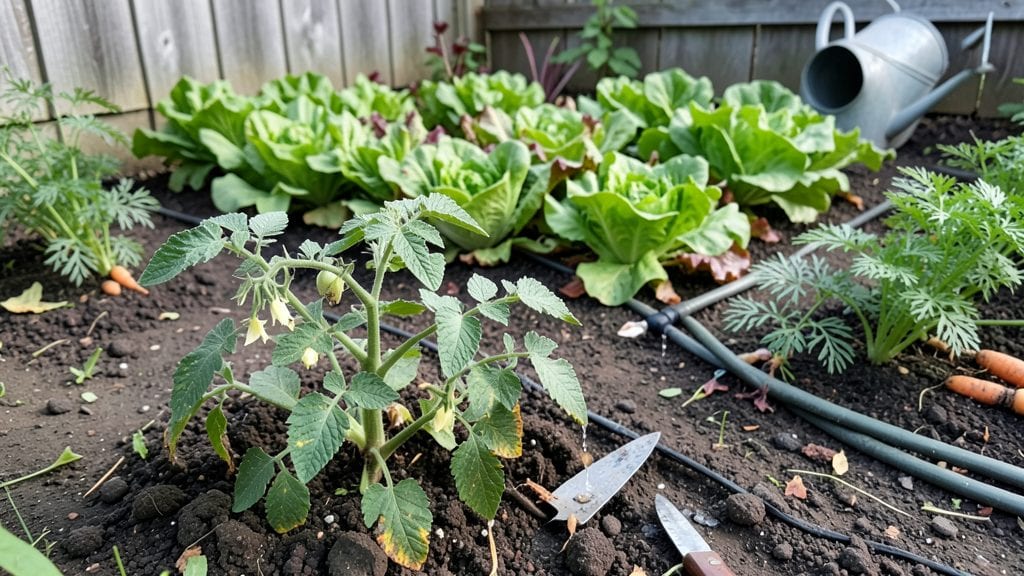
Watering your vegetable garden isn't just about keeping soil damp—it's the difference between a lush harvest and a sad, wilted disappointment. 🌱 I learned that the hard way after losing an entire row of tomatoes to inconsistent watering, but now I’ve cracked the science behind it.
The key isn’t how often you water, but when and how—deep soaks that encourage strong roots, not light sprinkles that just dry up fast.
Start with the right tools: a 5-gallon watering can for seedlings, a soaker hose for rows, or a drip irrigation system if you’re serious about efficiency. Check soil moisture by sticking your finger an inch deep—if it’s dry, water until moisture reaches 6 inches down.
Most veggies need 1–1.5 inches of water per week, but tomatoes and peppers demand more once fruiting starts. The goal? Consistency—plants hate mood swings in their hydration.
You’ll know you’re doing it right when leaves stay vibrant green, not yellow or crispy at the edges. Overwatering? Roots suffocate, leaves turn mushy. Underwatering? Plants bolt or fruit turns bland. The sweet spot keeps soil evenly moist, not soggy or bone-dry.
Once you master this, your garden will reward you with juicier tomatoes, sweeter carrots, and happier plants that fight off pests better. Trust me, it’s a game-changer.
This works for any vegetable, from leafy greens to heavy feeders like corn, but adjust for your climate—hotter days mean more frequent watering, while cooler weather lets soil hold moisture longer. Let’s dive into the exact schedule and tools that’ll turn your garden into a thriving machine.
📚 In This Guide
- What you need
- Instructions
- Tips and common mistakes
- Wrapping up and next steps
What you need
- ● Watering can or hose: A 5-gallon watering can (for precision) or a soaker hose (for efficiency). Look for a spray nozzle for gentle watering.
- ○ Timer or irrigation system: A smart sprinkler with a 12-hour timer (optional but game-changing for consistency).
- ● Moisture meter: A digital soil moisture sensor (e.g., Govee or Xiaomi) to check soil hydration—0-30% moisture means it’s time to water!
- ● Drip irrigation kit: A DIY system with ¼-inch tubing, emitters, and a backflow preventer (for larger gardens).
- ● Rain gauge: A simple 4-inch diameter gauge to track rainfall (aim for 1 inch per week during growing season).
- ● Mulch: Straw, wood chips, or shredded leaves (2–3 inches deep) to retain moisture and suppress weeds.
- ● Water storage: A 55-gallon barrel to collect rainwater (free hydration for your plants!).
- ● pH tester: To monitor soil acidity—most veggies thrive in 6.0–7.0 pH.
- ● Garden gloves: For easy handling while setting up systems or checking soil.
Instructions: design a watering system for a thriving vegetable garden
Here’s how to create a watering routine that balances plant health with efficiency—no guesswork involved.
💧 Step 1: Assess Your Garden’s Water Needs by Soil Type
First, determine whether your soil is sandy, loamy, or clay-heavy by squeezing a handful when moist. Sandy soil drains fast and needs frequent, shallow watering, while clay holds moisture longer and requires deeper, less frequent sessions. Loam—ideal for veggies—balances the two. I dig a 6-inch-deep hole, fill it with water, then time how long it takes to drain completely. This tells me the true irrigation cycle for my plot.
For most vegetable gardens, aim for 1-1.5 inches of water per week, including rainfall. Use a rain gauge or a tuna can buried in the soil to measure accurately. If your garden feels dry 2 inches below the surface, it’s time to water again—this is the root zone where plants pull moisture. Overwatering here wastes resources and suffocates roots.
☀️ Step 2: Time Watering for Maximum Uptake and Minimal Waste
Water early in the morning—between 6:00 and 9:00 AM—when temperatures are cool and evaporation is minimal. This ensures roots absorb moisture before the heat of the day. Avoid evening watering, as damp foliage overnight invites fungal diseases like powdery mildew. If you must water later, do it by 4:00 PM and aim for the soil, not the leaves.
For container-grown veggies, water when the top inch of soil feels dry. Stick your finger in—if it comes out clean, it’s time. Larger pots may need watering every 1-2 days in summer, while in-ground plants might stretch to 3-4 days between sessions. Mulch with 2-3 inches of organic matter (like straw or shredded leaves) to lock in moisture and reduce evaporation.
🌱 Step 3: Adjust for Plant Life Stages and Heat Waves
Seedlings and young transplants need consistent moisture to establish roots, so water lightly every 1-2 days until they’re 2-3 inches tall. Once established, most vegetables—like tomatoes, peppers, and cucumbers—prefer deep watering 2-3 times per week, encouraging roots to grow downward. Shallow watering leads to weak, surface roots that dry out faster.
During heat waves, increase frequency but not duration. Instead of 10-minute sessions, split into two 5-minute bursts with a 30-minute break in between. This prevents runoff and ensures water penetrates deeply. Leafy greens like lettuce and spinach tolerate more frequent, lighter watering, while root crops like carrots and potatoes need steady, deep hydration.
⏰ Step 4: Monitor and Adapt to Weather and Seasonal Shifts
Check soil moisture weekly by digging a 6-inch probe—if it’s dry at that depth, your plants are signaling thirst. Adjust your schedule based on rainfall: if you get 0.5 inches or more in a week, skip a watering session. Use a moisture meter for precision, especially in drought-prone areas. I keep one buried near my tomato plants to avoid over- or under-watering.
In fall, as temperatures drop, reduce watering by 25-50%. Plants slow their growth and need less to thrive. Winter watering is minimal—just enough to prevent soil from freezing solid. Spring is a transition period: increase gradually as new growth appears. Watch for wilting leaves, which can signal underwatering or, in some cases, overwatering paired with poor drainage.
🌿 Step 5: Upgrade to Efficient Systems for Long-Term Success
Drip irrigation or soaker hoses deliver water directly to the root zone, reducing waste and disease risk. Set up a timer for 2-3 sessions per week, adjusting flow rates based on plant types. For example, place drip lines 6-12 inches away from stems to avoid fungal issues. Mulch heavily around drip zones to retain moisture and regulate soil temperature.
If using sprinklers, opt for low-volume, oscillating models that mimic rainfall. Avoid overhead systems during late afternoon or evening. For raised beds, ensure water reaches the bottom edges to encourage root expansion. Test your system weekly by checking soil moisture at different bed depths—consistency is key to avoiding stressed plants.
Tips & tricks for perfect vegetable garden watering
Mastering your garden's hydration doesn't require guesswork—these science-backed strategies will transform your watering routine from hit-or-miss to consistently thriving plants.
Soil Test Precision: The 6-inch hole test in Step 1 isn't just about drainage—it reveals your soil's true water-holding capacity. I've found that clay soils often need 20-30% more water than the 1-1.5 inches weekly guideline because they drain so slowly. For sandy soils, split that 1.5 inches into two 0.75-inch sessions with a 6-hour gap to prevent runoff. The key is matching your watering to what your specific soil actually retains.
Morning Watering Secret: When you water between 6:00-9:00 AM as directed in Step 2, you're not just avoiding evaporation—you're leveraging plant biology. Most vegetables open their stomata (pores) in the morning to absorb moisture. This means your water goes directly to the roots where it's needed most, rather than sitting on the surface where it would evaporate. Pro tip: If you must water later, do it by 4:00 PM to give foliage time to dry before nightfall.
Heat Wave Hack: During extreme heat, the 5-minute burst technique in Step 3 works wonders, but timing matters even more. Water when soil temperatures drop below 85°F—early morning or late evening. I use a soil thermometer to check before watering. Also, water containers more frequently (every 1-2 days) than in-ground plants (3-4 days), as pots heat up faster and dry out quicker. The 30-minute break between bursts gives water time to penetrate rather than just pool on top.
Seasonal Transition Strategy: That 25-50% reduction in fall watering (Step 4) might seem drastic, but it's crucial. As temperatures drop, plant respiration slows, and roots need less oxygen. I've seen gardens where overwatering in fall leads to root rot because the soil stays too wet for the plant's reduced metabolic needs. In winter, I only water when the soil feels completely dry at 2 inches down—this prevents freezing damage while maintaining minimal moisture.
Pro Tips for Watering Veg Garden
- Mastering your garden's hydration doesn't require guesswork—these science-backed strategies will transform your watering routine from hit-or-miss to consistently thriving plants.
- Soil Test Precision: The 6-inch hole test in Step 1 isn't just about drainage—it reveals your soil's true water-holding capacity.
- Morning Watering Secret: When you water between 6:00-9:00 AM as directed in Step 2, you're not just avoiding evaporation—you're leveraging plant biology.
Frequently asked questions
Got questions about keeping your veggie patch happy and hydrated? You’re not alone! Here are answers to the most common queries—so you can water like a pro and watch your garden thrive.
How often should I water my vegetable garden?
Most veggies need 1–1.5 inches of water per week, including rainfall. Water deeply 2–3 times per week (morning is best!) to encourage strong roots. Leafy greens like lettuce prefer frequent, shallow watering, while tomatoes and peppers thrive with deeper, less frequent soaks. Check soil moisture—if the top inch feels dry, it’s time to water!
What’s the best time of day to water my garden?
Water in the early morning (5–9 AM) to reduce evaporation and fungal risks. Avoid evening watering—wet foliage overnight can invite pests and diseases. If you must water later, aim for late afternoon and ensure plants dry quickly. Pro tip: Drip irrigation or soaker hoses deliver water directly to roots, minimizing waste and maximizing efficiency!
Can I use rainwater or collected water for my veggie garden?
Rainwater is ideal—it’s chemical-free and mimics natural hydration. Collect it in barrels or use a rain garden setup. Just avoid watering with contaminated runoff (e.g., from roofs treated with pesticides). For collected water, let it sit for 24 hours to settle before use. Bonus: Rainwater helps prevent leaf burn from tap water’s chlorine or minerals.
Why are my vegetable leaves turning yellow or wilting after watering?
Yellow leaves often signal overwatering (roots suffocate) or underwatering (stress). Check the soil: If it’s soggy, reduce watering and improve drainage. Wilting? It could be root rot (too wet) or drought stress (too dry). Adjust your schedule, mulch to retain moisture, and ensure pots/containers have drainage holes. Act fast: Trim damaged leaves to redirect energy to healthy growth.
What’s a simple way to check if my veggie plants are getting enough water?
Do the “squeeze test”! Gently press the soil near roots—if it crumbles easily, it’s dry. If it stays clumped, it’s overwatered. For a visual cue, use a soil moisture meter ($10 at garden centers) or stick a wooden skewer in the soil; pull it out and check for dampness. Pro move: Group plants with similar water needs together to streamline care!
Wrapping up and next steps
Mastering the art of watering your veggie garden isn’t just about timing—it’s about understanding your plants’ needs and adapting to your climate. With the right schedule, consistent moisture, and a few smart tricks, you’ll be rewarded with vibrant, productive plants that thrive all season long. 🌱
Ready to take the next step? Start by observing your garden daily, adjusting your watering routine as the weather changes, and experimenting with mulch or drip irrigation for efficiency. Every drop counts—so grab that hose (or watering can) and watch your hard work grow! 💦✨