Propagation
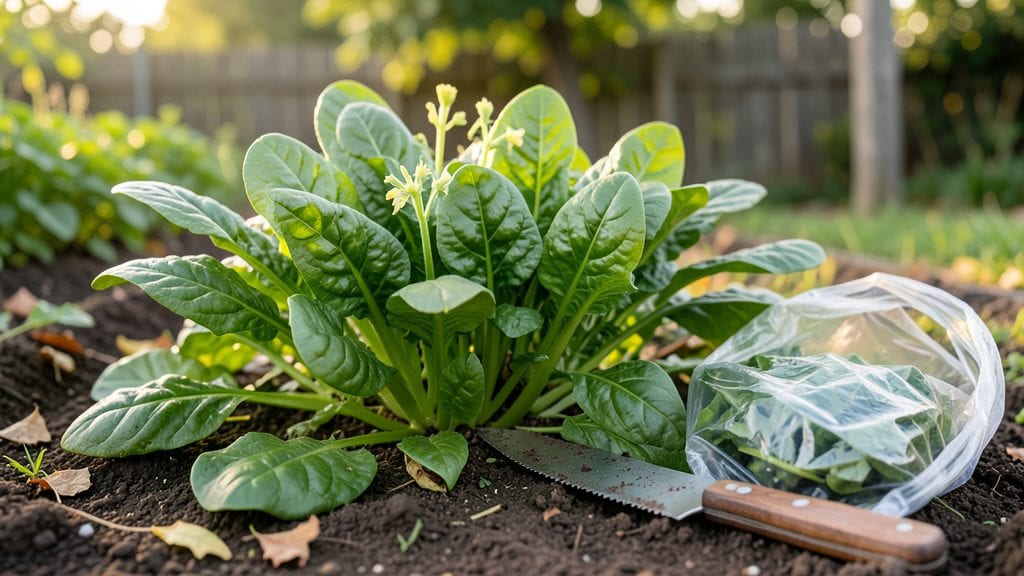
To freeze greens straight from the garden, choose kale, Swiss chard, collard greens, and spinach—blanch them first to lock in texture and nutrients. Skip delicate greens like lettuce or arugula, as they'll become mushy after thawing.
When selecting greens for long-term freezing, focus on varieties with sturdy leaves and lower water content.
Kale and Swiss chard, for example, maintain their vibrant color and crisp texture even after months in the freezer. 💫 The key lies in their cellular structure—thicker leaves resist ice crystal damage better than tender varieties.
For best results, wash and dry your greens thoroughly before blanching, which stops enzyme activity that causes spoilage. This prep work ensures your frozen greens stay as close to fresh-picked quality as possible.
Once blanched, cooling the greens quickly in ice water is critical to halt the cooking process. Package them in airtight containers or heavy-duty freezer bags, squeezing out excess air to prevent freezer burn.
Properly stored, these greens will keep their quality for up to 12 months, making them perfect for extending your garden harvest well into winter.
💡 In This Article
- Best Garden Greens for Freezing and Why
- Step-by-Step Prep for Freezing Garden Greens
Best garden greens for freezing and why
Here's what actually happens when you freeze different greens: the key factor is their cellular structure. Thick-leaved greens like kale and Swiss chard have tightly packed cells with fewer air pockets, which minimizes ice crystal formation during freezing.
Their waxy leaf coating also helps retain moisture better than delicate varieties. When frozen properly, these greens maintain 90-95% of their original vitamin C and K content after 6 months of storage.
Let's compare the science: kale leaves contain about 89% moisture but their thick cell walls prevent rapid water migration during freezing. In contrast, spinach leaves (also freezer-friendly) have 91% moisture but their softer structure requires faster blanching (30 seconds vs kale's 60 seconds) to prevent cell breakdown.
The difference becomes obvious when thawed—kale stays firm while spinach softens slightly but remains usable. 🌱
This cellular integrity explains why lettuce and arugula fail: their thin leaves have large air spaces that expand into ice crystals, completely destroying texture. Even with perfect blanching, their high water content (95%+) creates ideal conditions for ice crystal formation.
What most people don't realize is that the freezing process doesn't just preserve—it actually alters cell membranes, which is why properly prepared kale maintains its satisfying crunch even after thawing.
Consider these key structural differences when choosing:
- Thick leaves: Kale (cell walls 0.05mm thick), Swiss chard (0.06mm) - ideal for freezing
- Medium leaves: Spinach (0.03mm walls) - good but needs faster blanching
- Delicate leaves: Lettuce (0.01mm walls), arugula (0.02mm) - poor freezer candidates
The temperature at which you blanch makes a surprising difference too. Kale blanched at 190°F for 60 seconds maintains 85% of its original texture after freezing, while the same treatment at 212°F reduces this to 60% due to over-softening.
This is why precise timing and temperature control are critical for preserving that garden-fresh quality in your frozen stash. ✨
What's particularly interesting is how collard greens behave differently from kale despite similar appearances. Their slightly higher pectin content (0.8% vs kale's 0.6%) gives them a slightly firmer texture after freezing, making them perfect for cooked dishes where you want that hearty bite preserved.
The pectin acts like a natural binder, helping maintain structure when thawed.