
Picking
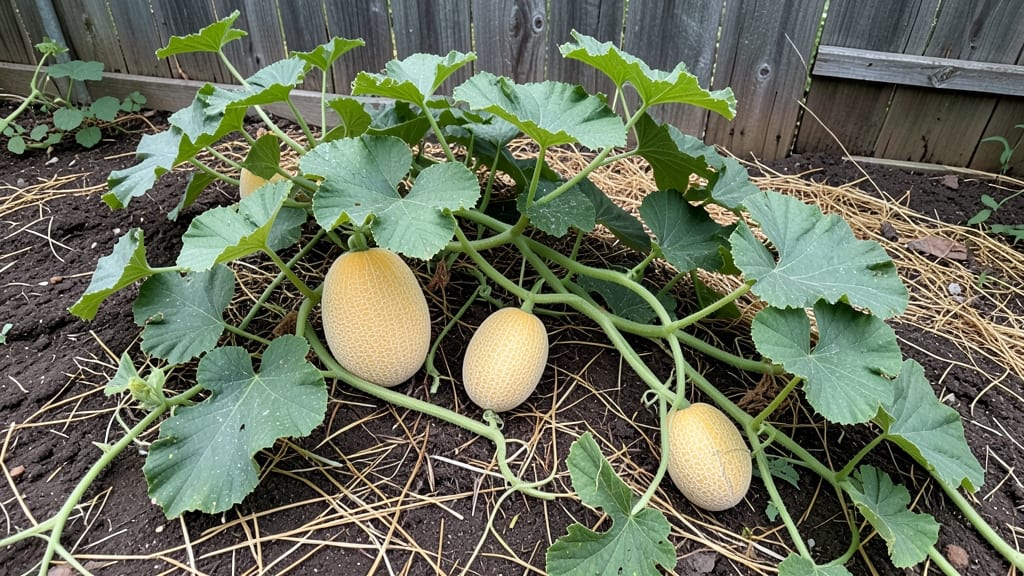
Harvest cantaloupe from your garden when the tendril near the stem turns brown and dries, the rind changes from green to cream or yellowish-beige, and the fruit emits a sweet, musky fragrance at the stem. Gently twist to detach—resistance indicates ripeness. Avoid harvesting too early or too late for optimal flavor and texture.
Timing your harvest right ensures that sweetness and texture are at their peak, as cantaloupe continues to ripen after picking only slightly. 🌟 The color shift from green to a pale cream or beige isn’t just about appearance—it signals the breakdown of chlorophyll and the development of sugars inside the fruit.
I’ve found that heirloom varieties often take 5-7 days longer to reach this stage compared to hybrids, so patience pays off when growing from seed.
Don’t overlook the scent test—this is where cantaloupe reveals its true maturity. A strong, sweet aroma at the stem means the fruit’s volatile compounds are fully activated, which translates to that signature honeyed flavor we all love.
If you’re unsure, try the thump test: a hollow sound indicates ripeness, while a dull thud suggests it needs more time on the vine.
💡 In This Article
- Cantaloupe Ripeness Indicators: Science Behind the Signs
- Step-by-Step Cantaloupe Harvesting Guide
Cantaloupe ripeness indicators: science behind the signs
The cantaloupe's color transformation from green to cream or beige isn't just visual—it's a biochemical process triggered by ethylene gas. As the fruit matures, chlorophyll breaks down while carotenoids (like beta-carotene) develop, creating that signature golden hue.
Heirloom varieties like 'Athena' often show more pronounced color shifts because their thicker rinds allow for slower, more dramatic pigment changes compared to hybrid 'Athena' which matures faster with subtler color shifts.
That brown, dried tendril near the stem? That's your first biological maturity signal. The tendril's death occurs as ethylene gas—produced by the ripening fruit—accelerates cell death in non-essential plant parts. This process happens about 24-48 hours before optimal harvest time.
Interestingly, hybrid varieties like 'Hale's Best' show tendril browning more consistently than heirlooms, which may exhibit slight variations in this cue.
The sweet, musky aroma comes from volatile compounds like linalool and terpenes that develop as sugars accumulate in the fruit. These compounds reach their peak concentration when the fruit's sugar content hits 8-12%—about double what you'd find in unripe cantaloupe.
The scent test is particularly reliable because these aromatic compounds are directly linked to the fruit's flavor profile, making it the most accurate ripeness indicator.
Here's what's happening chemically: Ethylene triggers the conversion of starches to sugars through enzymatic activity, particularly amylase enzymes that break down complex carbohydrates. This process creates that signature honeyed sweetness we associate with ripe cantaloupe.
The fruit's internal temperature also rises slightly during ripening, which helps activate these enzymes—this is why cantaloupes left on the vine too long can become overly soft.
One key difference between heirloom and hybrid varieties is their ethylene sensitivity. Heirlooms often produce more ethylene internally, leading to more dramatic ripening cues, while hybrids may rely more on external environmental factors.
This is why heirloom cantaloupes sometimes develop that perfect balance of sweetness and texture more consistently when given extra time on the vine.
What most gardeners don't realize is that cantaloupe continues to ripen slightly after harvest, but only for about 3-5 days. After that, the sugars begin converting to acids, making the fruit taste more tart.
This is why harvesting at the perfect moment—when all ripeness indicators align—is crucial for that ideal balance of sweetness and texture that makes cantaloupe so beloved.