
Picking
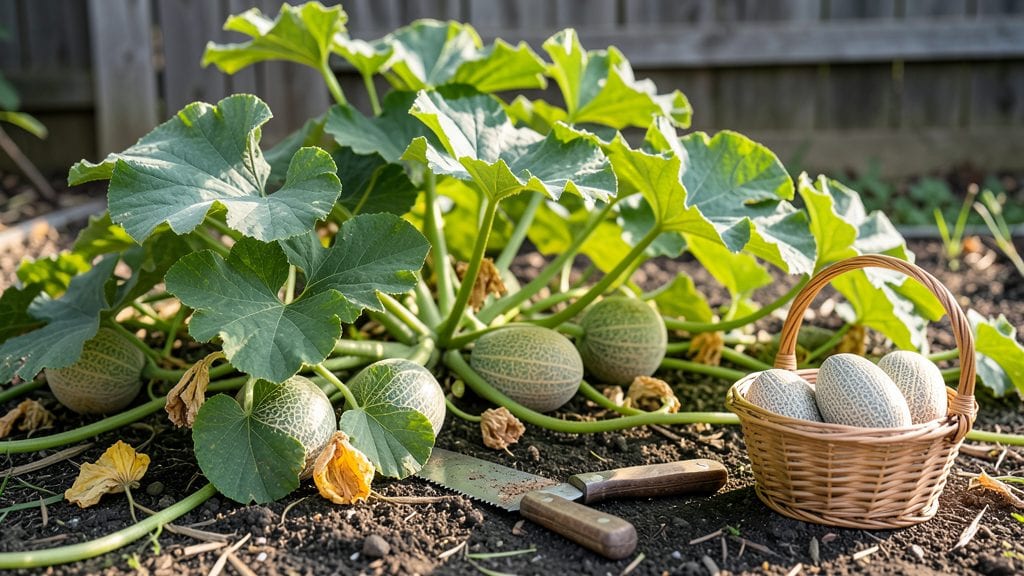
Picking cantaloupe from your garden at the right time means the difference between a sweet, fragrant melon and one that’s bland or mealy.
There’s nothing worse than slicing into a cantaloupe that’s still hard or sour—only to realize you picked it too soon. Or worse, watching your vines wither while waiting for that perfect moment.
The good news? With just a few simple checks, you can tell when your 🍈 is ready to harvest, no guesswork needed.
Here’s what to look for: the rind’s color shift, the stem’s behavior, and even how it sounds when tapped. These three signs alone will save you from overripe melons or wasted garden space.
Below, I’ll walk you through each clue—plus what to do if you miss the window and how to store your harvest for maximum flavor.


3 Visual signs your cantaloupe is perfectly ripe (don’t miss these)
Cantaloupes don’t ripen after picking, so timing is everything. One wrong move, and you’ll end up with seedy, watery melons that lack flavor. But when you nail the perfect harvest window, you’ll taste that sweet, fragrant reward of summer.
The key? Watching for these three foolproof visual cues that tell you it’s time to pick.
I’ve learned the hard way—overripe cantaloupes turn mushy, while underripe ones stay hard and bland. Here’s how to spot the difference with just your eyes and hands, no fancy tools needed.
-
1. Rind Color Shift
Look for a creamy yellow or tan hue near the stem (the blush zone). Avoid green or dull patches—those mean it’s not ready. Pro tip: Check the underside of the melon for a golden-beige net pattern. -
2. Stem Separation Test
Gently twist the stem near the fruit. If it detaches easily with a slight pull, it’s ripe. If it resists or snaps cleanly, wait 1-2 days. A stubborn stem means underripe fruit. -
3. The ‘Thump Test’
Give the melon a firm tap with your knuckles. A ripe cantaloupe sounds deep and hollow (like a drum). If it’s dull or flat, it’s not ready. Overripe melons may feel soft or mushy—avoid those!
Here’s what I’ve seen in my garden: Early-morning sun intensifies the rind color, so check melons in the late afternoon when temperatures drop. A sweet aroma near the stem is another bonus clue—though not all varieties smell strongly.
One year, I ignored the stem separation test and picked a cantaloupe too soon. The result? A watery, seedy mess that tasted more like cucumber than melon. Now, I double-check all three signs before harvesting. Your patience will pay off with bursting sweetness in every bite.
Avoid these common mistakes that even experienced gardeners make:
- Picking by size alone—some cantaloupes stay small but ripe.
- Ignoring the vine’s health—yellowing leaves near the fruit can signal ripeness.
- Using the ‘nail test’ (poking the rind)—this damages the melon and isn’t reliable.
Once you master these visual cues, you’ll never second-guess your cantaloupe harvest again. The first time I nailed it, I shared slices with neighbors—and now they ask me every year for my secret ripening tips. Trust me, your garden will thank you.
Pro tip: If you’re unsure, pick one melon as a test. Cut it open—if the seeds are dark and the flesh is orange, you’ve got it right. If not, learn from it and try again next time. Happy harvesting!
How to test cantaloupe ripeness beyond the basics (advanced techniques)
Once you’ve mastered the basics—like checking for that creamy yellow rind or the stem slip—there’s still more to uncovering the perfect cantaloupe. Advanced techniques like scent analysis and vine behavior can shave days off your harvest window and ensure you’re picking melons at their peak.
These methods work especially well for muskmelons (like Athena or Ambrosia) and honeydews, which ripen differently even within the same family.
For example, a ripe muskmelon will release a powerful, sweet aroma near its stem when gently squeezed—think cantaloupe candy meets honeyed hay. Honeydews, on the other hand, often lack this scent and instead rely on firmness and uniform color.
Ignoring these nuances can mean the difference between a juicy, flavorful melon and one that’s mealy or underwhelming.
Let’s talk about the nail test, a pro trick that’s often overlooked. Press your fingernail into the melon’s blossom end (the flat side). If the flesh gives slightly and feels creamy (not mushy), it’s ready.
For honeydews, you’ll need firmer pressure—they ripen slower and stay crisper longer. Overdoing this test can bruise the fruit, so use it sparingly on your final candidates.
Don’t forget to watch the vine itself. When cantaloupe are nearing ripeness, the leaves closest to the fruit will start yellowing and dying back.
This is your plant’s way of saying, “Pick me now!” For honeydews, the vine might stay green longer, so combine this with the firmness test to avoid mistakes. Pro tip: Mark your calendar when the first leaves yellow—most cantaloupes will be ready within 1-3 days.
Finally, adjust your timing based on your local climate. In hotter regions (like USDA Zone 9+), cantaloupes ripen faster and may need picking earlier in the day to avoid overheating.
In cooler areas, wait until late morning when sugars have peaked. The key? Consistency—check your melons at the same time daily for the most accurate results.
With these advanced techniques, you’ll go from guessing to precision harvesting, ensuring every cantaloupe you pick is a sweet, flavorful victory. Happy harvesting! 🍈