Planting
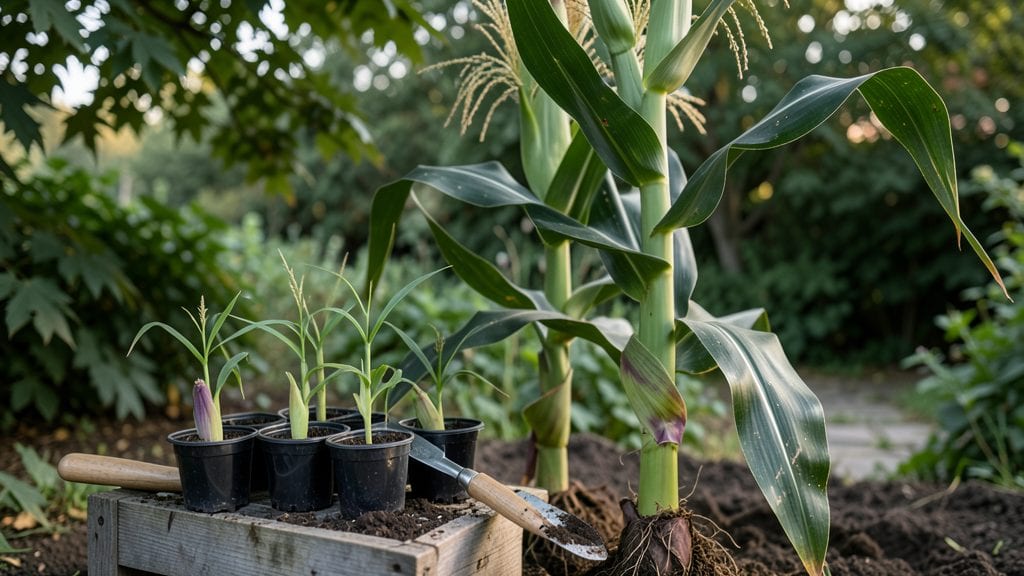
My garden corn spacing secrets come down to 12 inches between plants and 30-36 inches between rows—the difference between a scraggly mess and ears so plump they nearly split the husks. 🌽 I learned the hard way when my first attempt had plants fighting for sunlight, resulting in puny stalks and half-sized ears.
The right spacing isn’t just about yield—it’s about strong stalks, good air circulation, and ears that fill out properly.
Most gardeners overlook how variety affects spacing. Sweet corn like Silver Queen needs 12 inches apart, while larger varieties like Country Gentle can stretch to 18 inches—check your seed packet.
Soil type matters too: loose, well-draining soil lets roots spread easier, so you can space a little tighter if your dirt drains well. And don’t forget: corn thrives in full sun, so wider rows let sunlight reach every plant without shading.
When done right, you’ll harvest ears that weigh 8-12 ounces instead of the 4-6 ounce nubs from crowded plants. The stalks stay sturdy, the silk dries evenly, and you avoid the dreaded "blind ears" where kernels never form.
Even in small gardens, proper spacing maximizes every square foot—no wasted space or underperforming plants.
Here’s the kicker: this spacing works whether you’re growing one row or a full field. The same principles apply to raised beds, containers (with dwarf varieties), or even urban gardens with vertical supports. Once you master it, you’ll never go back to guessing again.
📚 In This Guide
- What you need
- Instructions
- Tips and common mistakes
- Wrapping up and next steps
What you need
- ● Garden Corn Seeds – Choose a variety suited to your climate (e.g., Silver Queen, Golden Bantam, or Ambrosia). Buy enough for your planned rows (typically 12–16 seeds per foot of row, depending on spacing).
- ● Garden Soil – Well-draining, fertile soil with a pH of 6.0–6.8. Amend with compost if needed.
- ● Fertilizer – A balanced, slow-release fertilizer (e.g., 10-10-10) or organic options like composted manure. Apply at planting and mid-season.
- ● Watering System – Drip irrigation or a watering can for consistent moisture (corn needs 1–1.5 inches of water per week).
- ○ Stakes or Trellis (Optional but Helpful) – For tall varieties (e.g., Country Gentleman), use stakes or a trellis to support heavy ears.
- ● Garden Twine or String – To mark rows and maintain spacing.
- ● Gloves & Knee Pads – For comfort during planting and weeding.
- ● Row Cover or Mulch – Protects young plants from pests and retains moisture (straw or black plastic work well).
- ● Planting Gauge or Ruler – Ensures precise garden corn spacing (aim for 8–12 inches apart in rows, with rows 24–36 inches apart).
- ● Cornmeal or Diatomaceous Earth – Natural pest deterrents for corn earworms and other critters.
- ● Notebook or Planting Journal – Track planting dates, spacing, and growth progress for future reference!
Step-by-Step instructions for planting corn with perfect spacing
Here's the spacing method I've used for years to grow sweet, sturdy cornstalks every time.
🌱 Step 1: Prepare Your Planting Rows
Corn thrives in warm soil and needs plenty of sunlight—so choose a location that gets full sun (at least 6-8 hours daily). Use a garden rake to create rows 30-36 inches apart. This spacing gives corn room to develop strong roots and prevents shading between plants.
For four rows, I like to space them evenly across a 6-foot-wide bed. This makes it easy to walk between rows for weeding and harvesting. If your soil feels compacted, loosen it 6-8 inches deep with a broadfork or tiller to improve drainage and root growth.
🌱 Step 2: Plant Seeds at the Right Depth and Spacing
Drop 1-2 corn seeds per hill, spacing hills 12-15 inches apart within each row. Planting two seeds per hill ensures at least one strong plant emerges, and you can thin later. Place seeds 1-1.5 inches deep—too shallow and they'll dry out, too deep and they won't sprout.
I like to use my finger to make small holes, then drop the seeds in and cover lightly with soil. Press the soil gently around the seeds to remove air pockets. If you're planting four rows, stagger the hills slightly to create a more natural, wind-resistant stand.
💧 Step 3: Water and Monitor Germination
Water the rows immediately after planting to settle the soil and provide moisture for germination. Keep the soil consistently moist until the corn reaches 6 inches tall, but avoid overwatering—corn roots need oxygen, and soggy soil suffocates them. You'll see sprouts in 7-14 days, depending on soil temperature.
Once seedlings emerge, thin to the strongest plant per hill. Use sharp scissors to snip weak stems at soil level—this prevents disease spread from damaged plants. Watch for even growth; if some hills are lagging, check for consistent moisture and sunlight exposure.
☀️ Step 4: Maintain Spacing as Corn Grows
As corn grows taller, it may lean toward the sun. If you notice stalks touching or shading each other, gently spread them apart to maintain 12-inch spacing between plants. This ensures each plant gets enough sunlight for strong ear development. You'll know you're doing well when the top leaves form a canopy but still allow light to reach the lower stalks.
Side-dress with compost or balanced fertilizer when plants reach 12 inches tall to support their rapid growth. Avoid piling fertilizer against stems—keep it 3-4 inches away to prevent burn. Mulch rows with 2-3 inches of straw or grass clippings to retain moisture and suppress weeds.
✂️ Step 5: Harvest at Peak Ripeness
Corn is ready to harvest when the silks turn brown and the kernels are plump and milky when pierced with a fingernail. Use a sharp knife to cut stalks 6-8 inches above the ground—this leaves enough strength in the remaining stalk to support later harvests if you're growing multiple varieties.
For four rows, you'll have enough corn for fresh eating, freezing, or sharing. Store ears in the fridge for 1-2 weeks or blanch and freeze for long-term use. If you notice ears with poor development, check your spacing—crowded plants often produce smaller ears due to competition for nutrients and light.
Tips & tricks for perfect garden corn spacing
These simple but game-changing tips will help you grow corn that's tall, healthy, and packed with sweet flavor—no guesswork required.
The Sunlight Secret: That 6-8 hours of full sun isn't just a suggestion—it's non-negotiable for corn. I've seen plants in partial shade grow tall but produce tiny, starchy ears. If your garden gets less than 6 hours, consider using a sun calculator to map your yard's light patterns throughout the day. Morning sun is especially important for drying dew quickly, which prevents fungal diseases.
Soil Prep Matters: Don't skip loosening that 6-8 inches deep in Step 1—corn roots need room to grow. I've found that using a broadfork instead of a tiller preserves soil structure better. If your soil feels heavy or compacted, mix in a 1-inch layer of compost before planting. This improves drainage and gives your corn's roots the space they need to anchor properly.
Planting Precision: When creating those 12-15 inch hills in Step 2, use a small stick or dowel as a spacing guide. Press it into the soil at each hill location to mark your spacing before planting. This ensures consistent hills every 12-15 inches without guessing. For four rows, I like to use a 6-foot measuring tape to mark the 30-36 inch row spacing first—this creates a grid pattern that makes maintenance easier later.
Thinning Technique: When you thin seedlings in Step 3, don't just pull weak plants—snip them at soil level with clean scissors. This prevents disease from spreading through damaged stems. I've learned the hard way that leaving weak plants can lead to mold issues later. Also, thin during cool morning hours when plants are less stressed from heat.
Pro Tips for Garden Corn Spacing
- These simple but game-changing tips will help you grow corn that's tall, healthy, and packed with sweet flavor—no guesswork required.
- The Sunlight Secret: That 6-8 hours of full sun isn't just a suggestion—it's non-negotiable for corn.
- Soil Prep Matters: Don't skip loosening that 6-8 inches deep in Step 1—corn roots need room to grow.
Frequently asked questions
Got questions about spacing your garden corn for the best harvest?
You’re not alone! Here are answers to the most common questions—plus a few pro tips to set you up for success.
How far apart should I plant corn in a row?
For most sweet corn varieties, space plants 8–12 inches apart within the row. This gives roots room to spread while keeping plants close enough to support each other’s stalks. If growing for silage or field corn, you can stretch spacing to 12–15 inches for larger ears.
What’s the best time to thin corn seedlings?
Thin seedlings when they’re 3–5 inches tall (usually 2–3 weeks after germination). Use sharp scissors or your fingers to snip the weakest plants at soil level, leaving only the strongest stalks. Pro tip: Thin on a cloudy day to reduce stress on remaining plants!
Can I plant corn too close together?
Yes! Overcrowding leads to poor air circulation, increasing fungal diseases like rust or blight. You’ll also see smaller ears and weaker stalks. If you’ve already planted too close, thin immediately or consider spacing adjacent rows wider to improve airflow.
Is there a way to save space if my garden is small?
Try square-foot gardening: Plant 4 corn plants per square foot (9-inch spacing) or use trellises for dwarf varieties (like ‘Bodacious’). Just ensure they get 6+ hours of sun daily—corn is a sun-hungry crop!
Why are my corn plants leaning or falling over?
Leaning stalks often mean poor spacing or root-bound plants. Check for:
- Overcrowding in rows (thin immediately).
- Weak stems from nitrogen deficiency (side-dress with compost).
- Wind exposure (stake tall varieties if needed).
Wrapping up and next steps
Perfecting your garden corn spacing is the secret to a bountiful harvest—whether you’re planting in hills or rows! 🌽 By following proven spacing techniques (like 12–15 inches apart in rows spaced 30–36 inches apart), you’ll maximize sunlight, airflow, and yield.
Now that you’re armed with the right knowledge, it’s time to roll up your sleeves and get planting!
Ready to take the next step? Start small—try a test patch this season to refine your technique, and soon you’ll be sharing ears of corn with neighbors (or freezing them for winter feasts!). Happy growing! 🌱