
Tools
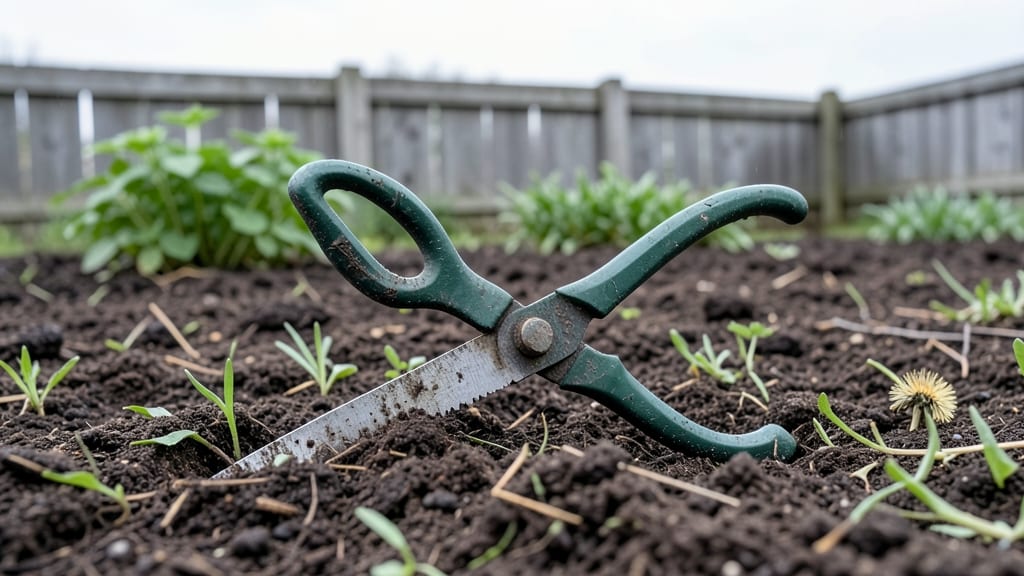
Garden scissors are called pruners or shears, with pruners designed for precise cutting of small branches and stems, while shears handle thicker foliage and larger trimming tasks efficiently.
When you're dealing with garden maintenance, the terms pruners and shears refer to two distinct tools built for specific jobs. Pruners excel at clean cuts on delicate stems—think roses or perennials—thanks to their sharp, bypass blades that minimize damage.
Shears, on the other hand, tackle thicker branches and dense foliage with their longer blades and stronger construction. 🌿 The right choice depends on what you're trimming: pruners for precision work and shears for heavy-duty tasks like shaping shrubs or clearing overgrowth.
Many gardeners keep both on hand to cover all their trimming needs efficiently.
Understanding these differences isn't just about having the right tool—it's about protecting your plants. Poor cuts can stress plants or leave them vulnerable to disease, so using the correct tool for the job makes a real difference in your garden's health.
For example, bypass pruners are ideal for deadheading flowers, while heavy-duty shears can handle thick branches without clogging. This distinction saves time and effort in the long run.
💡 In This Article
- Pruners vs Shears: Key Differences in Design and Function
- Choosing the Right Garden Scissors for Your Plants
Pruners vs shears: key differences in design and function
The most critical difference between pruners and shears lies in their blade mechanisms. Pruners typically feature a bypass blade system, where two sharp blades move past each other like scissors.
This design creates a clean, precise cut that minimizes damage to plant tissue, making it ideal for delicate stems or flowers. The blades usually have a 1/4-inch to 1/2-inch cutting capacity, perfect for branches up to pencil thickness.
Shears, however, use an anvil blade design—one sharp blade meets a flat, unsharpened surface. This creates a crushing action that can handle thicker branches and dense foliage, often up to 3/4-inch in diameter.
The trade-off is potential plant damage from the crushing force, which can bruise stems and invite disease. Shears also feature longer blades (typically 6 to 12 inches) for reaching deeper into thick shrubs or hedges, while pruners stay compact at 4 to 6 inches for precision work.
Handle ergonomics play a surprising role in function. Pruners often have angled or cushioned handles designed for one-handed use, allowing gardeners to make quick cuts without repositioning. Shears, with their longer blades, require two-handed operation and feature reinforced grips to handle the force needed for thick cuts.
The leverage difference means shears can cut through branches three times thicker than pruners, but with more effort—this is why professional landscapers often use ratcheting shears for repetitive heavy-duty work.
Material composition further separates these tools. High-quality pruners use stainless steel or carbon steel blades with hardened edges that stay sharp longer, while shears may incorporate chrome-vanadium steel for durability against repeated heavy cuts.
The blade geometry matters too: pruners have serrated or micro-serrated edges to prevent slippage on smooth stems, whereas shears often have straight cutting edges optimized for clean shearing action on broadleaf plants.
Consider this real-world example: When deadheading roses, bypass pruners create a 0.25-inch clean cut that heals quickly, while shears would crush the stem and leave a jagged edge prone to rot.
For trimming boxwood hedges, however, shears' longer reach and crushing power make them indispensable for maintaining sharp edges without snagging. The right tool isn't just about cutting capacity—it's about preserving plant health through proper technique.
What most gardeners overlook is how blade maintenance affects performance. Pruners need regular sharpening to maintain their bypass precision, while shears benefit from occasional oiling to prevent rust in their anvil mechanism.
Neglecting either leads to uneven cuts or increased effort—proving that design isn't just about initial function but long-term usability too. 🌿