
Tools
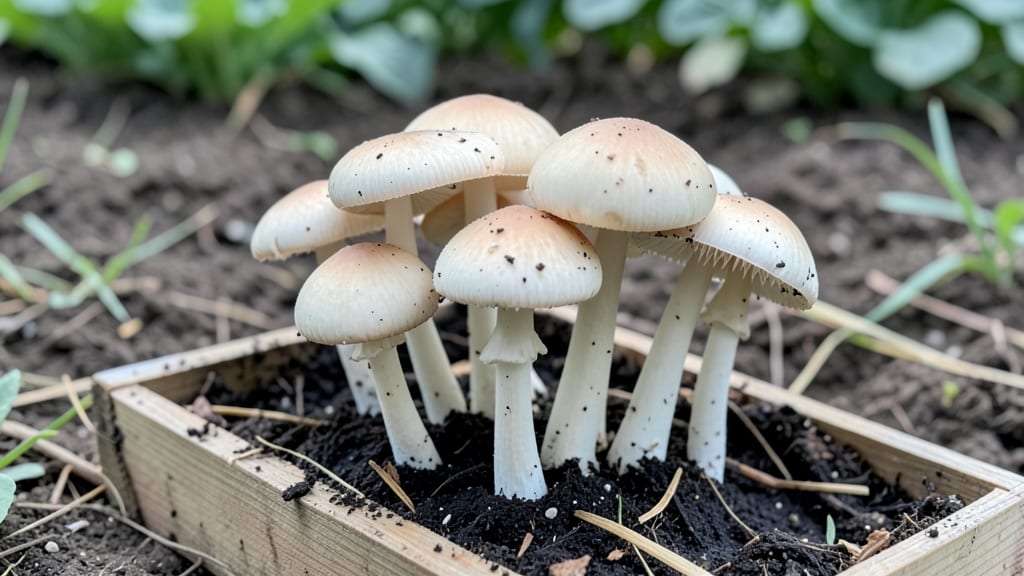
To identify garden mushrooms correctly before you pick them is crucial—some can be deadly, while others are delicious, and I’ve made mistakes that taught me the hard way. closer, so I’ll walk you through the key features that separate edible varieties from dangerous ones.
Start by checking the cap shape, gill color, and whether the mushroom has a ring or not—these details make all the difference. Most edible garden mushrooms have smooth caps and white or light-colored gills, while toxic ones often have red or brown gills or a powdery spore print.
If you’re unsure, don’t risk it—some species can be deadly within hours.
You’ll feel much safer once you know how to spot the warning signs: bruising stems, yellowing gills, or a strong unpleasant odor. I keep a small field guide handy and use a mycology app to double-check anything suspicious.
When in doubt, toss it—your garden’s mystery fungi can wait for an expert’s opinion.
This method works for backyard gardens, wooded edges, or even potted plants where mushrooms might sneak in. The key is patience and attention to detail—no need for fancy tools, just a sharp eye and a little research. Let’s break it down step by step so you can garden with confidence.
What Triggers Mushroom Confusion
Mistaking one mushroom for another—especially in your garden—can turn a harmless harvest into a dangerous gamble. But why does this confusion happen so often? The answer lies in a mix of natural factors, human behavior, and even the way mushrooms themselves evolve.
Understanding these causes can help you spot the red flags before you pick. Let’s break it down.
Many mushroom species share striking similarities in shape, color, and growth patterns, making them nearly identical to the untrained eye. For example:
- Look-alikes with deadly differences: The Amanita bisporigera (a deadly "destroying angel") mimics the Amanita muscaria (fly agaric), but the former lacks the bright red cap and has a smoother stem. Pro tip: Always check for gills, stem texture, and spore print—these are game-changers in ID.
- Seasonal shape-shifters: Some mushrooms, like the Morchella esculenta (morel), change appearance based on moisture levels. A dry morel might look shriveled and unrecognizable compared to its plump, honeycomb cousin.
- Juvenile vs. mature stages: Young Gyromitra esculenta (false morel) resembles a morel, but as it ages, its brain-like folds become a dead giveaway—and a warning sign of toxicity.
Actionable fix: Use a spore print kit to compare colors under UV light or consult a local mycology field guide for your region’s tricky doubles.
Mushrooms thrive in specific environments, and their habitat can create false assumptions about their identity. Here’s how:
- Wood vs. soil preferences:
Mushroom Grows On Toxic Look-Alike Lentinula edodes (shiitake) Decaying hardwood logs Grifola frondosa (hen-of-the-woods, edible but bitter)Pleurotus ostreatus (oyster mushroom) Living or dead trees Hypholoma fasciculare (sulphur tuft, toxic) - Symbiotic relationships: Mycorrhizal mushrooms (like Boletus edulis) form partnerships with tree roots, while saprophytic types (like Agaricus bisporus) feed on decaying matter. Mixing these up can lead to poisoning—e.g., the Boletus satanas (deadly bolete) grows near oaks but lacks the nutty aroma of its edible cousins.
- Pesticide or fertilizer contamination: Chemicals in garden soil can alter mushroom growth, making them appear stunted or discolored. A Coprinus comatus (shaggy ink cap) might look pale and weak if nitrogen levels spike, mimicking a Clitocybe dealbata (deadly fungus).
Actionable fix: Test soil pH and avoid synthetic fertilizers near wild patches. If mushrooms grow in clusters near treated wood, assume they’re unsafe until confirmed by an expert.
Even experienced foragers fall into traps caused by cognitive shortcuts. Here’s how:
- Confirmation bias: If you’ve picked Cantharellus cibarius (chanterelle) before, you might overlook subtle differences in a new patch—like the Hydnum repandum (hedgehog mushroom), which has spines instead of gills. Pro tip: Force yourself to describe the mushroom out loud before identifying it.
- Relying on smell alone: Anise-scented mushrooms (like Marasmius oreades) are often safe, but some toxic species, such as Cortinarius rubellus, also emit pleasant aromas. Never trust smell over other traits.
- Digital misinformation: Social media and foraging apps sometimes spread incorrect IDs. A viral "morel mushroom" photo might actually be a Verpa conica (early morel), but without context, users assume all are edible.
Actionable fix: Join a local mycological society or use apps like iNaturalist to cross-reference IDs with verified experts. When in doubt, throw it out!
Mushrooms aren’t static—they adapt to climate, altitude, and even pollution. This variability creates "cheat codes" for misidentification:
- Alpine vs. lowland strains: The Boletus pinophilus (porcini) in the Alps might have a darker cap than its Mediterranean cousin, leading foragers to dismiss it as a Boletus badius (bitter bolete).
- Early vs. late-season growth: Russula species (like the Russula emetica) can change color as they age, turning from green to red—tricking pickers into thinking they’ve found a safe Lactarius deliciosus (saffron milk cap).
- Urban vs. wild patches: Mushrooms growing in city parks (e.g., Agaricus bisporus) may absorb heavy metals, altering their taste and safety. Never eat mushrooms from high-traffic areas unless tested.
Actionable fix: Study regional field guides and note how local mushrooms deviate from textbook descriptions. Photograph every angle and compare with verified samples.
Fixing Common Mushroom Mix-Ups
Mistakenly identifying mushrooms can turn a thrilling foraging adventure into a dangerous gamble. Whether you’re dealing with toxic lookalikes, confusing growth patterns, or misjudging habitat, the good news is that most mix-ups are avoidable with the right approach.
Below, we’ll break down the most common issues and provide clear, actionable solutions—plus tips to prevent future confusion.
Some of the deadliest mushrooms resemble their safe counterparts almost identically. For example, the Death Cap (Amanita phalloides) can be mistaken for the Paddy Straw Mushroom (Volvariella volvacea), while the Destroying Angel (Amanita bisporigera) might fool foragers into thinking they’ve found a Morel (Morchella spp.).
✅ Solution: The "Rule of Three" Test
When in doubt, apply these three critical checks before consuming any wild mushroom:
- 🔍 Spore Print Test: Place the cap (gills down) on white paper, cover it with a bowl, and let it sit overnight. Toxic mushrooms like Amanita species often produce white spores, while many edible varieties (e.g., Chanterelles) leave yellow or brown prints.
- 🧪 Chemical Reactions: Use a drop of iron sulfate or potassium hydroxide (KOH) on the flesh. A color change (e.g., blue-green with KOH) can signal toxicity in mushrooms like Cortinarius species.
- 📖 Expert Verification: Send a photo to a local mycological society or use apps like iNaturalist or PictureThis. When in doubt, throw it out—no mushroom is worth the risk.
💡 Prevention Tip:
Carry a field guide (like Mushrooms Demystified by David Arora) and cross-reference features with photos. Never rely solely on color or size—context matters!
Many mushrooms thrive in specific conditions, and harvesting them out of season or in the wrong environment can lead to bitter flavors, tough textures, or even inedible specimens. For instance, Morels only appear in spring near decaying wood, while Chanterelles prefer warm, humid forests in late summer.
✅ Solution: Master the "Golden Rules" of Foraging
Follow these habitat and seasonal guidelines to avoid disappointment:
| Mushroom Type | Best Habitat | Foraging Season |
|---|---|---|
| Morels (Morchella) | Near burned areas, apple trees, or coniferous forests | Early spring (March–May) |
| Chanterelles (Cantharellus) | Deciduous forests (oak, birch, or pine) | Late summer to fall (July–October) |
| Oyster Mushrooms (Pleurotus) | On hardwood trees (often cultivated on logs) | Year-round (wild varieties peak in fall) |
| Lion’s Mane (Hericium erinaceus) | On dead hardwood trees (oak, walnut) | Fall (September–November) |
💡 Prevention Tip:
Keep a foraging journal to track where and when you find mushrooms. Note weather patterns, nearby plants, and soil types—these clues can help you predict future harvests safely.
Mushrooms absorb toxins from their environment, including pesticides, heavy metals, or industrial pollutants. Foraging near roadsides, farms, or treated wood can expose you to dangerous levels of contamination.
✅ Solution: The "50-Foot Rule" and Soil Testing
Follow these steps to minimize risk:
- 🚫 Avoid High-Risk Zones: Stay at least 50 feet away from roads, agricultural fields, and industrial areas. Mushrooms near these spots may contain lead or herbicide residues.
- 🌿 Test Soil pH: Most edible mushrooms prefer slightly acidic soil (pH 5.0–6.5). Use a soil test kit to ensure your foraging spot is safe.
- 🧪 Home Contamination Test: Soak mushrooms in vinegar or lemon juice for 10 minutes—if the water turns cloudy or discolored, discard them.
💡 Prevention Tip:
Stick to wild, undisturbed forests or certified organic farms for foraging. If you’re unsure, grow your own mushrooms at home using sterilized substrates (like straw or sawdust).
Some mushrooms are safe but unpalatable when raw or undercooked. Others, like Jack-O’-Lantern Mushrooms (Omphalotus illudens), can cause stomach upset if eaten in large quantities.
✅ Solution: The "Cook’s Test" for Safety
Before eating any wild mushroom, follow this foolproof method:
- 🍳 Cook a Small Batch: Sauté a handful in oil with garlic and salt. If it smells bitter, metallic, or foul, toss it.
- 🥗 Try a Tiny Bite: Wait 15–30 minutes for any adverse reactions (nausea, dizziness, or tingling). If nothing happens, proceed cautiously.
- 📝 Document Reactions: Note which mushrooms agree with you and which don’t. Share your findings with local foraging groups.
💡 Prevention Tip:
Start with well-documented edibles like Chanterelles, Oyster Mushrooms, or Hen of the Woods before experimenting with rarer finds. When in doubt, consult a mycologist or chef experienced in wild foraging.
With these solutions, you’ll transform guesswork into confidence—turning your garden (or local woods) into a safe, delicious mushroom hunting ground. Happy foraging! 🍄✨
Frequently asked questions about garden fungi
What are the most common mushrooms found in home gardens?
Your garden might host Agaricus bisporus (button mushrooms), Coprinus comatus (shaggy ink caps), or Marasmius oreades (fairy ring mushrooms). These often appear after rain in lawns or mulched beds. Lactarius species (milk caps) may also pop up near trees, but avoid them—they can cause stomach upset.
How can I tell if a garden mushroom is safe to eat?
Never eat wild garden mushrooms unless you're 100% certain of their identity. Look for these red flags: bright red gills, white spore prints, or a ring on the stem. If you see any of these, assume it's toxic. Even "safe" varieties like Marasmius oreades can cause reactions in sensitive individuals.
Why do mushrooms keep growing back in my garden?
Mushrooms return because their mycelium (root-like network) remains in the soil. They thrive in moist, shaded areas with organic matter. To discourage them, improve drainage, reduce mulch thickness, and avoid overwatering. If they're unwanted, rake them up immediately—they spread spores that encourage regrowth.
Can I use vinegar to identify poisonous mushrooms?
Yes! Some toxic mushrooms (like Amanita species) turn yellow or red when sliced and exposed to vinegar. Place a drop of vinegar on the cap—if it changes color within 10 minutes, discard it immediately. This test isn't foolproof but helps rule out dangerous varieties quickly.
What should I do if I accidentally eat a wild mushroom?
Seek emergency medical help immediately, even if symptoms don't appear right away. Bring the mushroom (or a photo) to the hospital. Toxic reactions can take 6-24 hours to develop. Never induce vomiting unless instructed by poison control—some toxins cause more damage when regurgitated.