Flowers
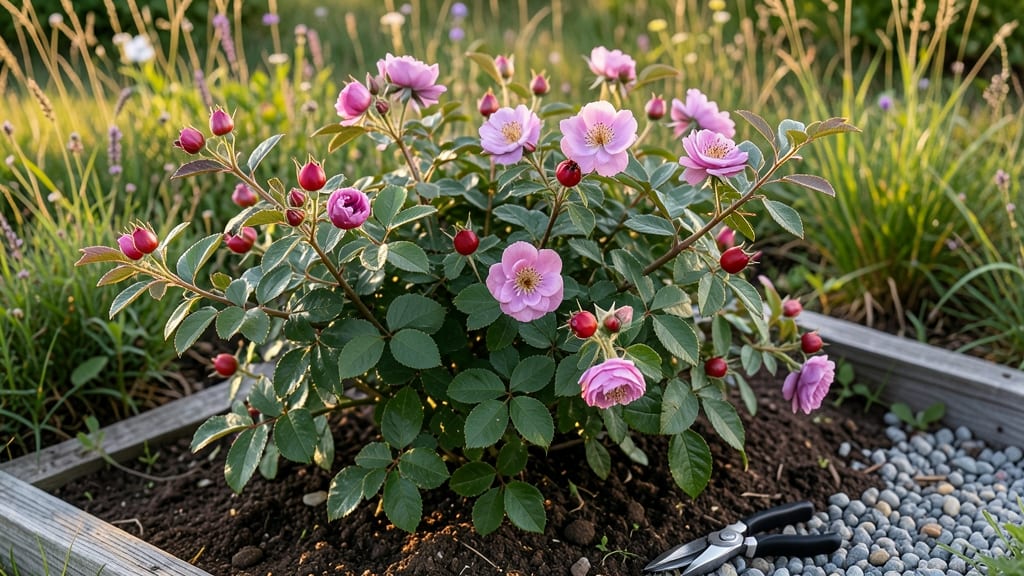
Thorny garden flowers create living barriers that outperform any fence. 🌿 I learned this the hard way after my neighbor's curious cat started using my new trellis as a jungle gym. These plants aren't just for show—they're the ultimate privacy solution with built-in security and year-round interest.
Roses, barberries, and Pyracantha top the list for their dramatic foliage and berries that last from summer through winter. They thrive in full sun to partial shade and handle most soil types, making them low-maintenance workhorses.
The key is spacing them properly—about 3-4 feet apart for roses, tighter for barberries—to ensure they fill in without crowding each other.
You'll end up with a lush, impenetrable screen that blooms in spring, fruits in fall, and stays green all winter. The thorns discourage intruders while the flowers attract pollinators, turning your barrier into an ecosystem. Plus, the rustling foliage adds movement and texture that no wooden fence ever could.
Works equally well as a standalone hedge, mixed border, or climbing structure. Just avoid planting near high-traffic areas where the thorns might be a hazard. Here's how to make them the star of your garden design without the headaches.
📚 In This Guide
- What you need
- Instructions
- Tips and common mistakes
- Wrapping up and next steps
What you need
- ● Thorny flowering plants (5–10 per linear foot of barrier): Rose bushes (e.g., Rosa rugosa, Rosa 'Dr. Huey') – 3–5 ft tall
- ● Pyracantha (Pyracantha coccinea) – 6–12 ft tall, berry-producing
- ● Goumi berry (Elaeagnus multiflora) – 8–10 ft tall, fragrant flowers
- ● Barberry (Berberis thunbergii) – 3–5 ft tall, evergreen or deciduous
- ● Blackberry or raspberry canes (native varieties) – 6–10 ft tall, fast-growing
- ● Soil amendments (per 10 sq ft): Compost (2–3 gallons) – improves drainage and fertility
- ● Organic mulch (e.g., wood chips or pine straw, 2–3 inches) – retains moisture
- ○ Support structures (optional but recommended): T-posts or wooden stakes (1 per plant, 6–8 ft tall)
- ● Twine or garden ties (50 ft roll) – for training vines
- ● Garden trowel or spade
- ● Pruning shears (bypass or anvil type)
- ● Measuring tape (for spacing plants)
- ● Gloves (heavy-duty, thorn-resistant)
- ● Watering can or hose with nozzle
- ● Wheelbarrow (for transporting soil/mulch)
- ● Sunlight: Full sun (6+ hours/day) for most thorny plants; partial shade for shade-tolerant varieties like Berberis.
- ● Space: Allocate at least 3–4 ft of width for mature growth (wider for faster privacy).
- ● Drainage: Ensure the area isn’t waterlogged; raised beds help if needed.
- ● Local regulations: Check if invasive species (e.g., Rosa rugosa) are restricted in your area.
How to create a stunning thorny flower privacy screen
Here's my go-to method for planting a lush, impenetrable barrier that thrives year-round.
🌱 Step 1: Choose the Right Thorny Flower Varieties
For a dramatic privacy screen, I recommend a mix of roses (like 'Dr. Huey' or 'Gladiator'), pyracantha (firethorn), and smartweed (persicaria). These plants offer dense foliage, vibrant blooms, and protective thorns. Plant 4-5 varieties in clusters to create visual interest while maximizing coverage.
Check your hardiness zone—most thorny flowers thrive in USDA zones 5-9. I always verify each plant's mature height (typically 6-12 feet) to ensure they'll reach your desired privacy height. Space them 3-4 feet apart in the ground for full growth.
🪴 Step 2: Prepare the Planting Site
Clear the area of weeds and grass, then loosen the soil to a depth of 12 inches with a shovel or tiller. Mix in 3-4 inches of compost to improve drainage and fertility. Thorny plants hate soggy roots, so if your soil drains poorly, add sand or perlite to the mix.
Dig holes twice as wide as the root ball but only as deep as the container. This encourages roots to spread outward rather than settling too deep. Place each plant in its hole, ensuring the top of the root ball sits 1 inch above soil level—this prevents rot when watering.
☀️ Step 3: Plant and Water Thoroughly
Backfill the hole with soil, pressing gently to remove air pockets. Water each plant deeply (1-2 gallons) until moisture seeps out the bottom of the hole. Mulch around the base with 2-3 inches of wood chips or bark, keeping it 6 inches away from the stem to prevent rot.
I always water again after mulching to help settle everything. Thorny plants need consistent moisture during their first year, so check soil 1-2 inches deep—if it feels dry, water again. Avoid overhead watering once plants are established to prevent fungal diseases.
✂️ Step 4: Prune for Density and Shape
Prune in early spring before new growth appears. Cut back 1/3 of the oldest stems to encourage fresh, vigorous growth. Remove any dead, diseased, or crossing branches. For roses, shape them into a rounded form by trimming outward-facing growth.
Prune again in mid-summer after flowering to maintain shape and encourage a second bloom. Always use sterilized pruners and clean cuts at a 45-degree angle. Watch for new shoots growing from the base—these are your plant's future strength, so leave them be.
🌿 Step 5: Maintain for Year-Round Privacy
Fertilize twice a year—once in early spring with a balanced 10-10-10 fertilizer and again in mid-summer with a low-nitrogen, high-phosphorus blend to boost blooms. Water deeply once a week during dry spells, but let the soil dry slightly between waterings.
Watch for pests like aphids or spider mites—a strong spray of water usually does the trick. If birds or animals bother your plants, a lightweight netting can protect them without harming the thorns. With proper care, your screen will grow 3-4 feet per year, reaching full privacy in 3-5 years.
Tips & tricks for perfect thorny garden flower privacy screens
A few key strategies will help you create a thriving, impenetrable privacy barrier that looks stunning year after year.
Variety Matters: In Step 1, don't just plant one type of thorny flower—mix roses, pyracantha, and smartweed for maximum coverage and visual appeal. I've found that grouping 4-5 varieties together creates a denser screen faster than planting single species. The different growth habits and bloom times also ensure year-round interest.
Soil Prep Secrets: When preparing your planting site in Step 2, pay special attention to drainage. Thorny plants like roses and pyracantha absolutely hate soggy roots. If your soil drains poorly, mix in sand or perlite to create a well-draining medium. I always test drainage by digging a hole, filling it with water, and checking how long it takes to drain—it should disappear within an hour.
Watering Wisdom: The deep watering in Step 3 is crucial during the first year. Water each plant with 1-2 gallons until moisture seeps out the bottom of the hole. After mulching, water again to help settle everything. Here's the thing: thorny plants need consistent moisture but hate wet feet. Check soil 1-2 inches deep—if it feels dry, water again. I use a moisture meter to avoid guesswork.
Pruning Pro Tips: When pruning in Step 4, focus on removing 1/3 of the oldest stems in early spring. This might seem drastic, but it encourages fresh, vigorous growth. For roses, I always shape them into a rounded form by trimming outward-facing growth. This creates that lush, full look that makes your privacy screen look intentional rather than wild.
Pro Tips for Thorny Garden Flowers
- A few key strategies will help you create a thriving, impenetrable privacy barrier that looks stunning year after year.
- Variety Matters: In Step 1, don't just plant one type of thorny flower—mix roses, pyracantha, and smartweed for maximum coverage and visual appeal.
- Soil Prep Secrets: When preparing your planting site in Step 2, pay special attention to drainage.
Frequently asked questions
Got questions about adding thorny garden flowers to your privacy screens? You’re not alone! Here are some of the most common queries—and their practical answers—to help you plan with confidence.
What are the best thorny flowers for year-round privacy?
Top picks include Pyracantha (firethorn), Rosa rugosa (rugged rose), Berberis thunbergii (Japanese barberry), and Gleditsia triacanthos (honey locust). These thrive in diverse climates and offer dense, impenetrable foliage with sharp thorns. For tropical zones, Acacia or Bougainvillea are excellent alternatives.
How long does it take for thorny plants to grow into a privacy barrier?
Most thorny shrubs and small trees reach 6–8 feet tall in 3–5 years with proper care. Faster growers like Pyracantha can add 2–3 feet per year, while slower varieties (e.g., Rosa rugosa) may take 5+ years. Plant in early spring for the best head start!
Are thorny plants dangerous to pets or children?
While thorns deter intruders, some plants (like Berberis) are mildly toxic if ingested. Avoid Gleditsia (honey locust) near pets—its seed pods can cause blockages. Opt for non-toxic options like Rosa rugosa or Hibiscus syriacus (thornless varieties) for safer family gardens.
Can I mix thorny flowers with other plants for a softer look?
Layer thorny shrubs (e.g., Pyracantha) with non-thorny climbers like Clematis or Jasmine for texture. Add ornamental grasses (e.g., Pennisetum) or evergreen perennials (e.g., Heuchera) to soften edges. Just ensure the thorny plants dominate the base for security.
How do I handle thorns when pruning or maintaining these plants?
Wear thick gloves (leather or chainmail) and long sleeves to avoid pricking. Use bypass pruners (not anvil pruners) for cleaner cuts. For stubborn thorns, dip tools in soapy water after use to remove sap. Prune in late winter/early spring to encourage dense growth.
Pro Tip: Mulch heavily around thorny plants to suppress weeds and retain moisture—this reduces the need for frequent pruning near thorns!
Wrapping up and next steps
Transforming your garden into a lush, thorny privacy haven is easier than you think! These dramatic flowers aren’t just beautiful—they’re functional, offering year-round security while adding texture and intrigue to your outdoor space.
Whether you’re drawn to roses, pyracanthas, or holly, each plant brings its own unique charm and resilience.
Ready to take the next step? Start small—pick one or two varieties to test in a corner of your garden, then expand as you fall in love with their growth and impact. Watch your space evolve into a thorny masterpiece that’s as practical as it is stunning! 🌿✨