Plants
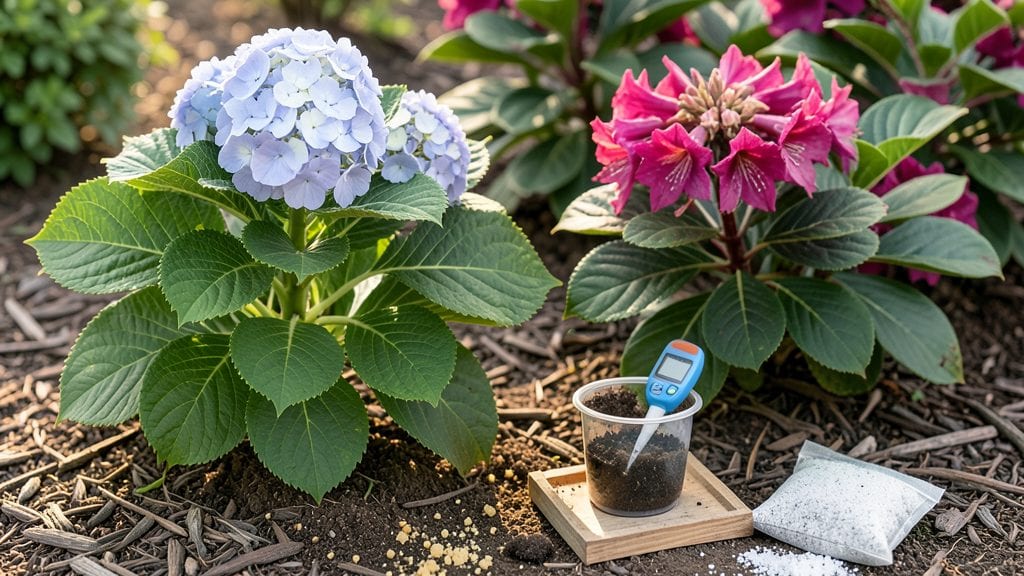
Garden plants that need lime to thrive include azaleas, rhododendrons, blueberries, and most vegetables like broccoli, kale, and cabbage. These acid-sensitive plants prefer alkaline soils with pH levels between 6.5 and 8.0, where lime helps neutralize acidity and unlock essential nutrients.
Lime works like a natural pH balancer—when applied to acidic soil, it reacts with hydrogen ions to raise the pH, making nutrients like phosphorus and calcium more accessible. 🌱 For example, blueberries need precise pH control (around 4.5-5.5), but adding lime can help neighboring plants like strawberries (which prefer 5.8-6.5) coexist in the same bed.
I always recommend testing soil first with a simple pH kit to avoid overcorrecting, especially in regions with naturally alkaline soils like the Southwest or Southeast.
Many gardeners overlook how lime benefits more than just acid-loving plants—it also helps prevent soil compaction and improves drainage over time. The key is choosing the right type: dolomitic lime adds both calcium and magnesium, while agricultural lime focuses solely on calcium.
For container gardens, use crushed oyster shell instead of powdered lime to avoid clumping.
💡 In This Article
- How Lime Adjusts Soil pH for Acid-Loving Plants
- Best Lime-Loving Plants for Vegetable Gardens and Landscapes
How lime adjusts soil pH for acid-loving plants
When you add lime to acidic soil, you're essentially triggering a chemical reaction that neutralizes excess hydrogen ions. Lime—typically made from calcium carbonate (CaCO₃) or dolomitic lime (which includes magnesium)—reacts with soil acidity (H⁺ ions) to form water (H₂O) and carbon dioxide (CO₂).
This process raises the soil's pH by reducing acidity, making it more alkaline. For instance, a soil with a pH of 5.5 (moderately acidic) might need 5-10 pounds of lime per 100 square feet to raise it to the ideal 6.5-7.0 range for most vegetables.
The type of lime you choose matters because it affects nutrient balance. Agricultural lime (pure calcium carbonate) boosts calcium levels, which strengthens plant cell walls and prevents blossom-end rot in tomatoes.
Dolomitic lime, however, adds both calcium and magnesium, which is crucial for plants like blueberries that need magnesium for chlorophyll production.
Without enough magnesium, leaves turn yellow between veins—a classic deficiency symptom. 🌿 The reaction time varies: surface-applied lime may take 2-3 months to fully integrate into the soil, while worked-in lime acts faster.
Here's the science behind why some plants need such precise pH control: At low pH levels, essential nutrients like phosphorus, calcium, and molybdenum become "locked" in the soil and unavailable to plants.
For example, blueberries require a pH of 4.5-5.5 to access iron and manganese, but adding lime to raise pH above 6.0 can cause iron deficiency, turning leaves pale yellow.
This is why gardeners often use lime sparingly around acid-loving plants and focus on testing soil every 1-2 years to monitor changes.
What most people don't realize is how lime improves soil structure over time. The calcium in lime helps break down clay particles, reducing compaction and improving drainage. This is especially helpful in heavy, clay-heavy soils common in the Midwest or Southeast.
For container gardens, crushed oyster shell works similarly to lime but releases calcium more gradually, preventing sudden pH spikes that could harm sensitive plants like azaleas.
Consider these key factors when choosing lime for your garden:
- Soil test results: Aim for a target pH based on your plants' needs (e.g., 6.5-7.0 for most vegetables, 5.0-5.5 for rhododendrons)
- Lime type: Use dolomitic lime if your soil test shows magnesium deficiency (common in sandy soils)
- Application method: Work lime into the top 6 inches of soil for best results, or top-dress and water thoroughly
- Timing: Apply lime in early spring or fall, giving it time to integrate before planting
The visual difference in plant health is dramatic when lime is applied correctly. After adding lime to my cabbage patch last year, the leaves went from dull green to vibrant, and the heads formed more uniformly.
The key is patience—lime doesn't work overnight, but the long-term benefits for nutrient uptake and soil health make it worth the effort. 💫