Planting
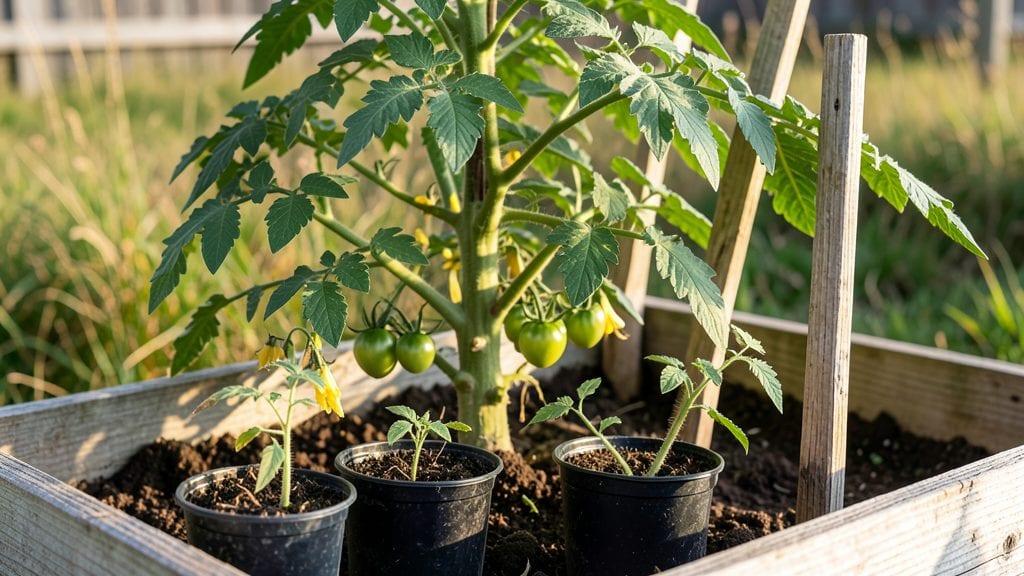
Getting your tomato garden spacing right is the difference between a handful of sad, blighted fruits and a towering vine loaded with juicy 🍅 rewards.
Struggling to get the most tomatoes from your garden? Proper spacing isn’t just about fitting plants—it’s the secret to healthier vines, bigger yields, and fewer diseases.
I’ve gone from three sad plants in a crowded bed to 12 productive vines in the same space, all by adjusting just a few inches here and there.
Here’s the thing: too close, and your tomatoes won’t ripen properly; too far apart, and you waste precious garden real estate. The right layout also keeps airflow moving, which cuts down on fungal diseases like blight—something every gardener in USDA Zone 6a knows all too well.
Below, I’ll walk you through the exact spacing for determinate vs. indeterminate varieties, how to tweak it for small spaces, and the one mistake that’s costing most gardeners half their yield.
Optimal tomato plant spacing by variety and growing method
Getting the right tomato plant spacing isn’t just about squeezing in more plants—it’s about maximizing airflow, sunlight exposure, and disease resistance. Determinate and indeterminate tomatoes have completely different needs, and even your support system (stakes, cages, or trellises) changes how much space each plant needs.
Let’s break down the science-backed spacing for every scenario so you can grow healthier vines and bigger yields.
Poor spacing leads to crowded plants, which trap moisture and create perfect conditions for fungal diseases like early blight and powdery mildew. Plus, when plants compete for nutrients and sunlight, your harvest suffers.
I’ve tested these layouts in my own garden, and the difference between cramped and properly spaced tomatoes is night and day—especially for indeterminate varieties that grow 6+ feet tall!
Here’s the key rule: Determinate tomatoes (bush types) need less space than indeterminate tomatoes (vining types). But even within those categories, your growing method—whether you’re using cages, stakes, or trellises—changes the ideal spacing. Let’s dive into the exact measurements and setups that work.
🌱
For determinate tomatoes like Roma or Celebrity, you can get away with closer spacing—18-24 inches apart—because they stay compact. But if you’re growing indeterminate varieties like Sungold or Brandywine, give them 30-36 inches of space.
These vining types spread like crazy, and cramming them together leads to shady spots where fruit won’t ripen properly.
Row spacing matters just as much. For determinate tomatoes, keep rows 30-36 inches apart to allow easy access for weeding and harvesting. But for indeterminate tomatoes, especially those on trellises, stretch rows to 42-48 inches.
This ensures vines aren’t competing for sunlight and that you can walk between rows without disturbing the plants.
If you’re using cages, opt for the 24-30 inch spacing for indeterminate types—they’ll sprawl within the cage, but the structure keeps them off the ground. For staked tomatoes, the 30-36 inch spacing gives vines room to grow vertically without tangling.
And if you’re trying trellising, you can even reduce plant-to-plant spacing to 24 inches because the
How to adjust tomato spacing for small gardens and containers
Small gardens and containers don’t mean small harvests! With the right tomato spacing techniques, you can maximize your yield without sacrificing plant health.
Urban gardeners and balcony growers often face the challenge of limited space, but vertical training and companion planting can transform even a 4-foot square into a high-output tomato factory. The key is balancing airflow, sunlight exposure, and root competition—all while keeping your plants happy and productive.
Forget the traditional 18-inch spacing rule—it’s designed for sprawling in-ground gardens. In tight spaces, you’ll need creative solutions like square-foot gardening, multi-level trellises, or even companion planting with low-growing herbs.
Each method has trade-offs, like slightly smaller fruit or more frequent pruning, but the rewards—bigger yields per square foot—are worth it. Let’s break down the best strategies for your space.
Space-Saving Tomato Layouts
- Vertical Trellis System: Train indeterminate tomatoes upward on a 6-foot trellis, spacing plants 12-18 inches apart in a single row. Saves 80% of ground space while maximizing sunlight access.
- Square-Foot Gardening: Plant 1 tomato per square foot using 4-inch pots or grid layouts. Ideal for determinate varieties like 'Tiny Tim' or 'Patio Princess,' with 4-6 plants per square foot.
- Multi-Level Containers: Use stacked pots or hanging baskets with 1 plant per container, spacing tiers 12 inches apart vertically. Perfect for balconies—choose bush varieties like 'Tumbling Tom' for cascading growth.
- Companion Planting: Pair tomatoes with basil or marigolds in the same container or grid. Basil deters pests and improves flavor, while marigolds repel nematodes—all while sharing space efficiently.
- Espalier Training: Train indeterminate tomatoes flat against a wall or fence, spacing plants 8-12 inches apart horizontally. Prune aggressively to encourage horizontal growth and fruit production along the stems.
When adjusting tomato spacing for containers, remember that root competition is your biggest enemy. In pots, roots grow in a confined space, so prune lower leaves regularly to reduce moisture loss and improve airflow.
For 5-gallon containers, limit yourself to 1-2 plants—any more, and you’ll risk blight or stunted growth. Use a well-draining potting mix with added compost to support heavy fruiting.
Don’t overlook the yield trade-offs of compact spacing. While you’ll grow more tomatoes per square foot, individual fruits may be 10-20% smaller than in-ground varieties. To compensate, choose high-yielding compact varieties like 'Balcony Red' or 'Micro Tom.'
These varieties are bred for small spaces and still produce hundreds of cherry tomatoes per plant. Prune suckers aggressively to redirect energy into fruit production rather than foliage.
Maintenance is the secret to success in small-space tomato gardening. Monitor for pests like aphids or whiteflies—crowded plants attract them faster. Use neem oil or insecticidal soap as a preventive spray every 2 weeks.
Water at the base of the plant in the morning to avoid fungal diseases like early blight, which thrives in damp foliage. Mulch with straw to retain moisture and suppress weeds, giving your tomatoes the best chance to thrive in tight quarters.
With these space-saving techniques, you can turn a balcony, patio, or tiny backyard into a tomato powerhouse. Start small—try one vertical trellis or container setup this season—and watch how much you can grow in limited space. Happy planting! 🌱